Latest Items
Theories of everything: the quest for ultimate explanation
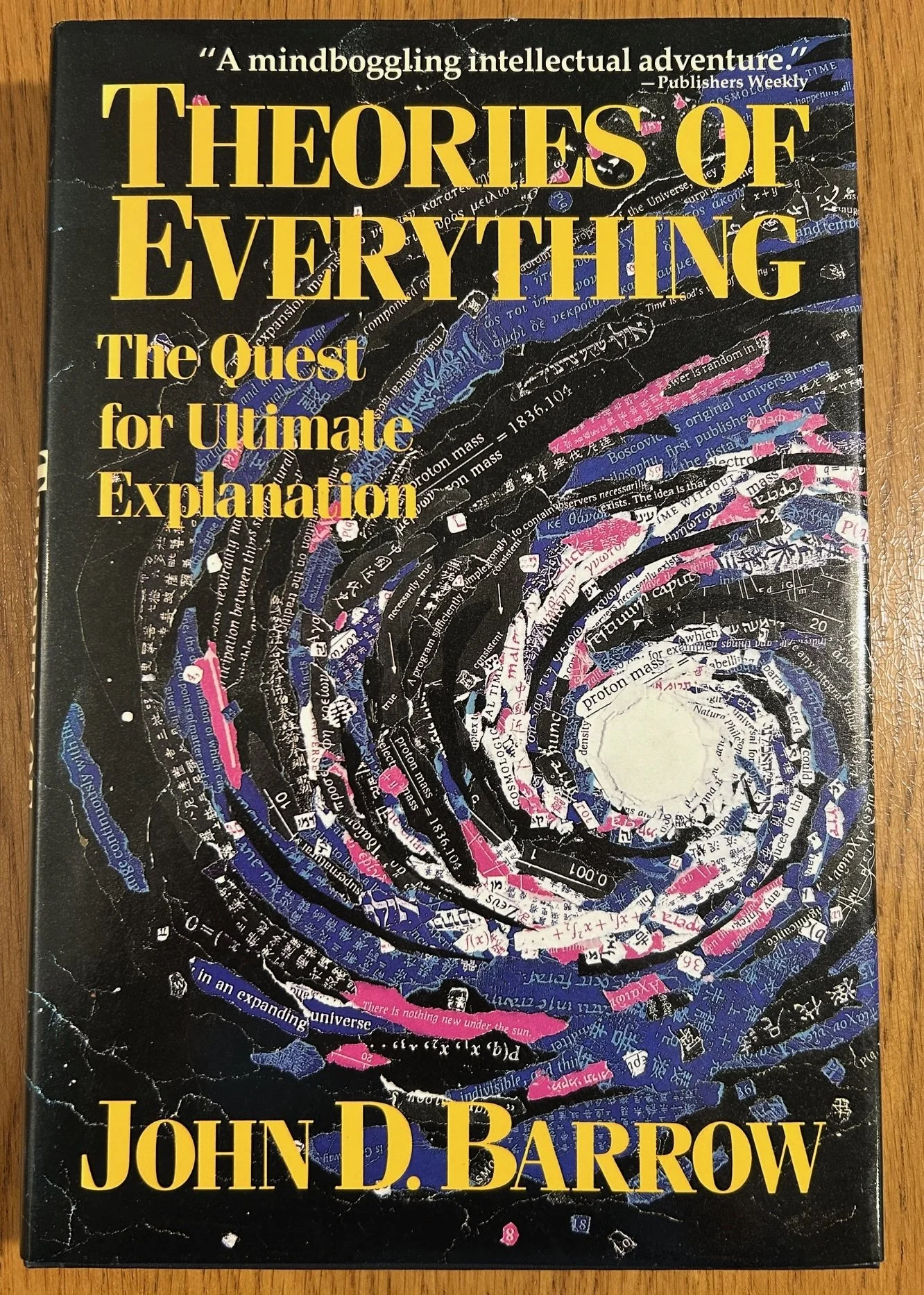

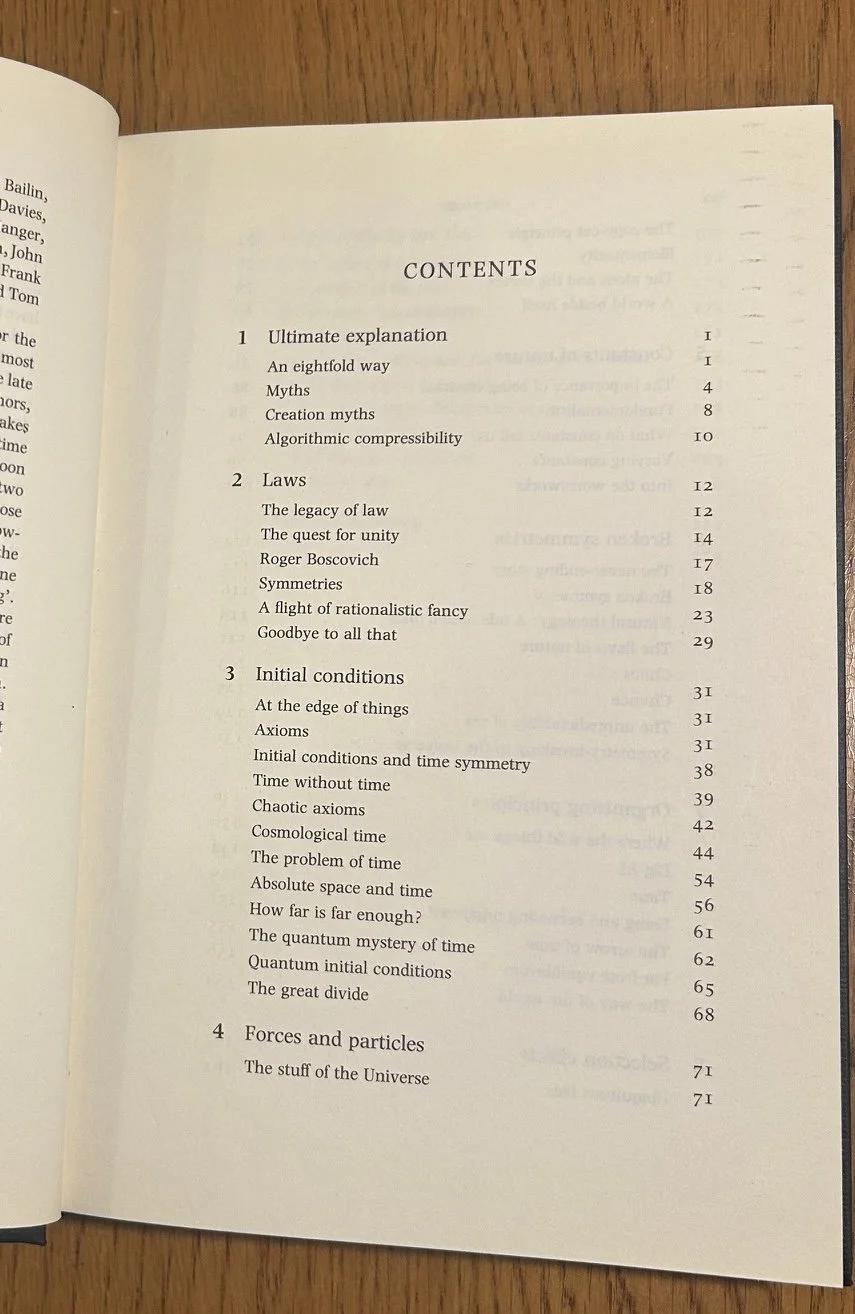
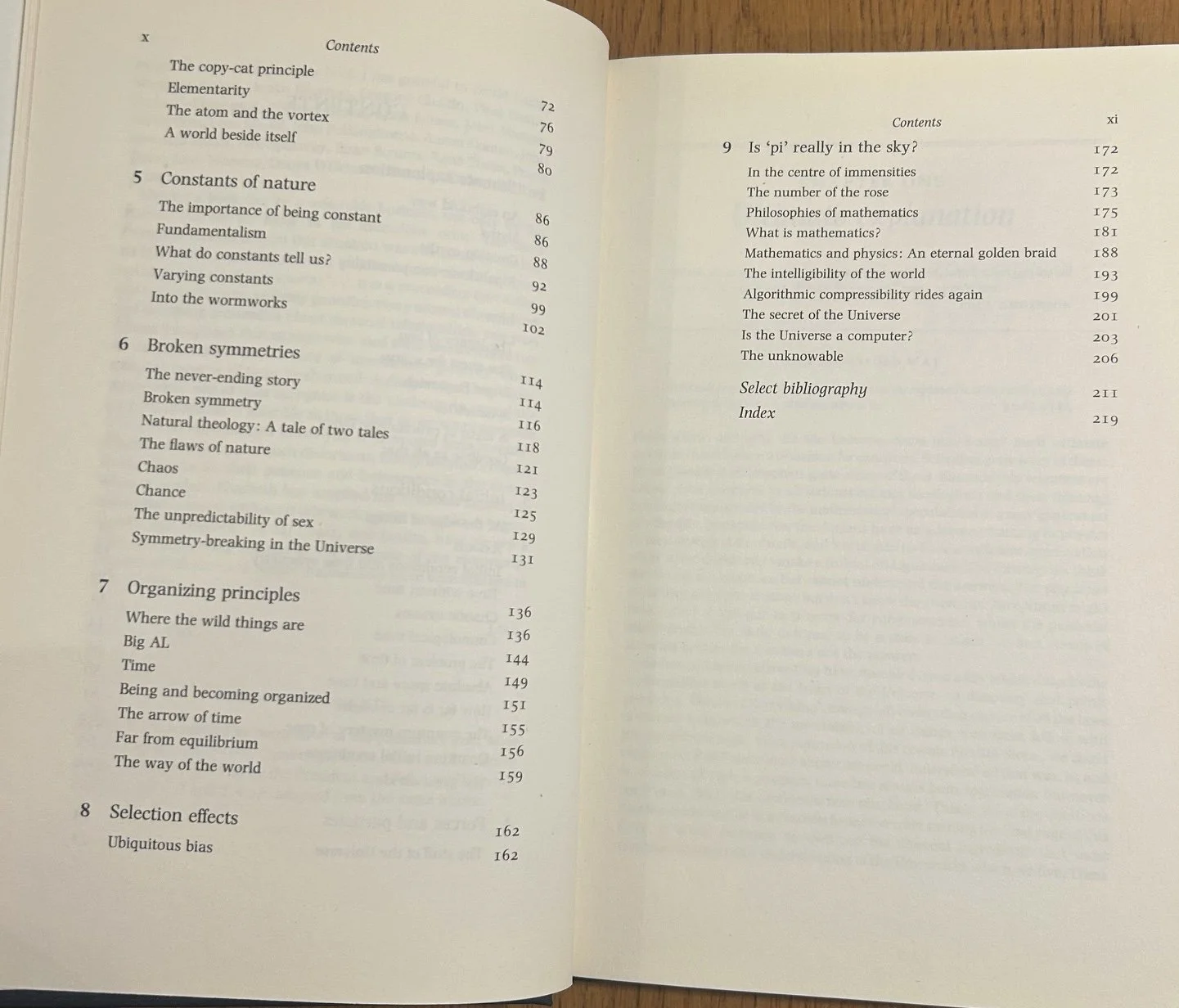
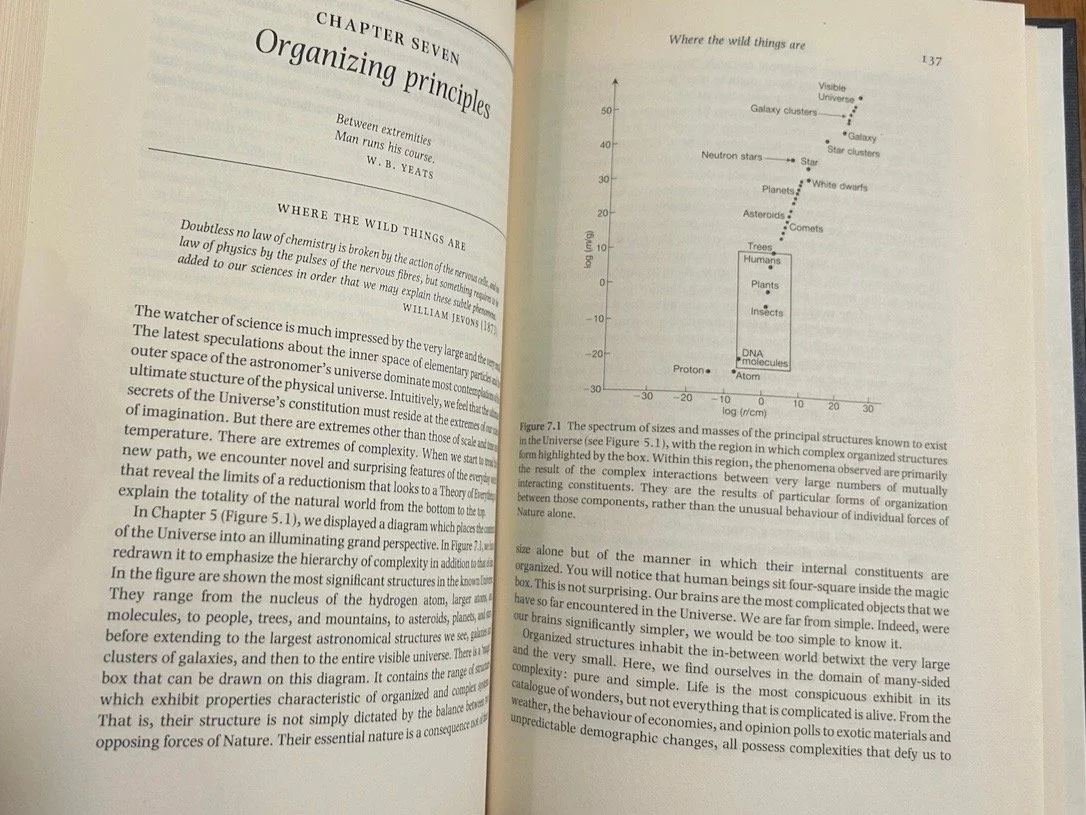
Theories of everything: the quest for ultimate explanation
by Barrow, John D.
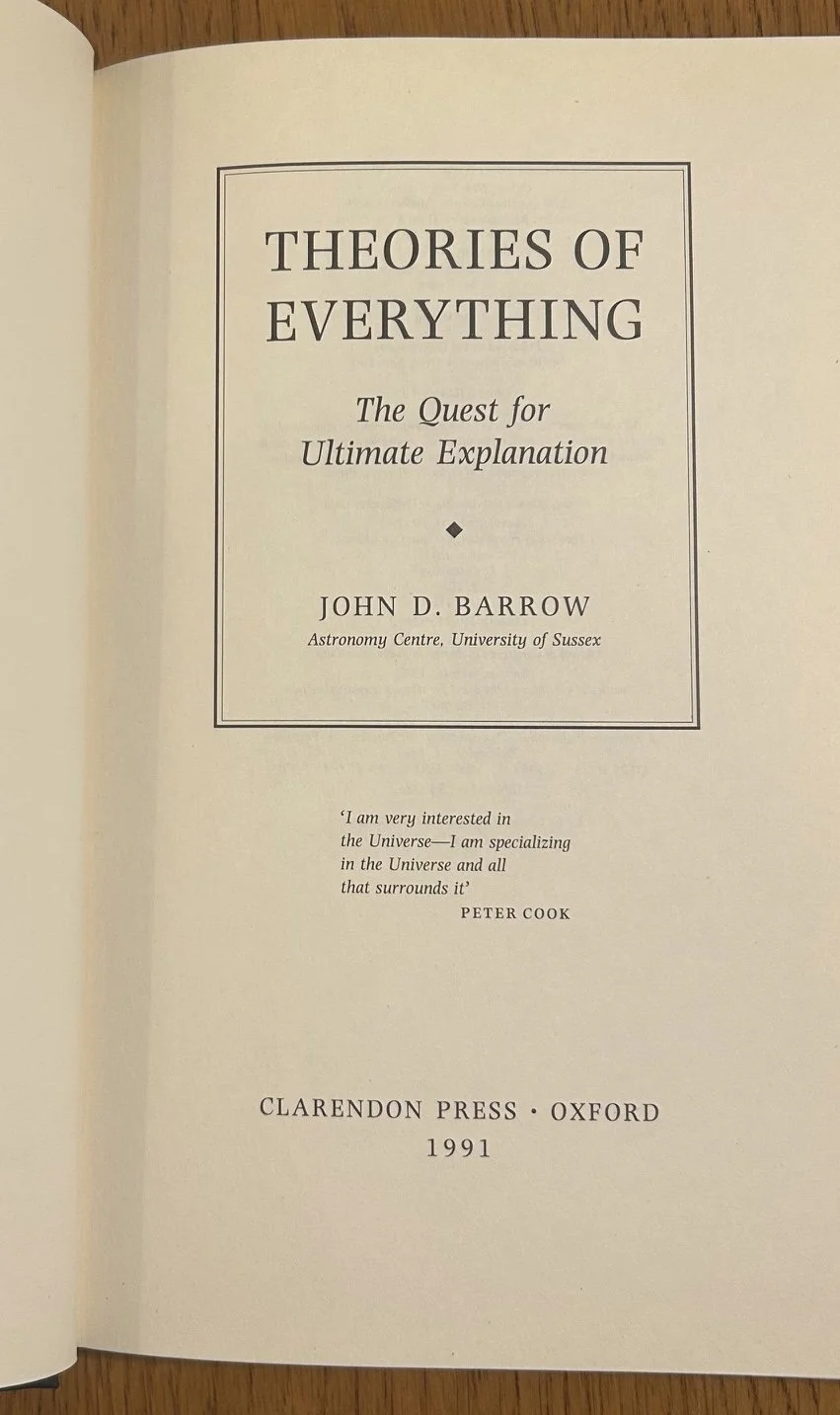
Published in 1991 by Clarendon Press; Oxford University Press, Oxford; New York
ISBN: 0198539282
Edition: First
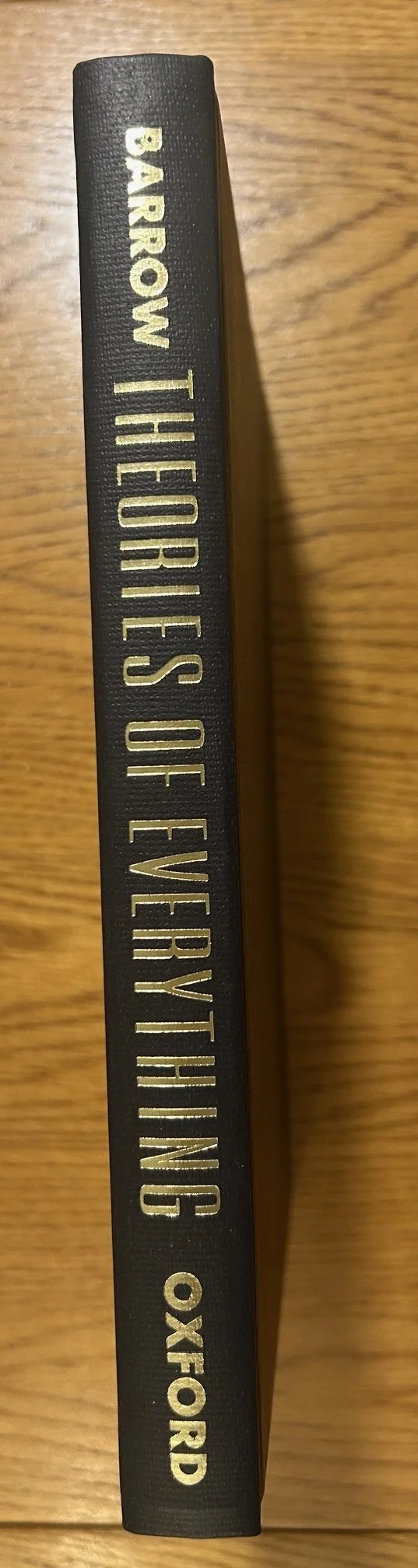
Binding: Hardback
Condition: As new.
Dust Jacket included. Condition of Dust Jacket: Near fine.
Comments: John D. Barrow, the Cambridge professor, cosmologist and physicist, and the author of “Theories of Everything: The Quest for Ultimate Explanations,” was not only a highly regarded scholar, he was determined to popularize science and make it accessible to common readers. On the one hand, he authored or co-authored hundreds of scientific research papers; on the other, he was an esteemed professor at Gresham College, whose sole purpose for over 400 years has been to deliver public lectures. He directed a mathematical educational program for elementary and high school students, and he wrote more than twenty books for the general public explaining scientific theories. That is what “Theories of Everything: The Quest for Ultimate Explanation” is. He does not break new scientific ground with this book. Instead, he discusses the philosophy behind the quest for the Theory of Everything that physicists have been pursuing. He says any such theory must account for the fact that the universe is “messy and complicated.” Mathematics does an excellent job of making the workings of nature coherent, he says, but it can never account for the infinite variety of human experience and thought. “No non-poetic account of reality can be complete,” he argues. Math and physics, in other words, aren’t “everything,” as vitally important as they may be.
In his 2020 obituary for Barrow, Paul Davies, co-director of the Arizona State University Cosmology Initiative, said: “His adventurous choices of research problems typified Barrow’s intellectual style, which was to challenge the hidden assumptions underpinning mainstream theories.” That came down to the brass tacks of what mathematics actually is, which he explores in this book, all the way up to questioning cosmological inflation. Yet, at the same time, most of the obituaries and other articles about Barrow use words like “humanist”—in the original Medieval and Renaissance sense of the term—to describe him, and talk about his wit and accessibility. For instance, besides developing theories addressing the expansion rate of the universe, Barrow came up with his own theory about the universe that he called “the Groucho Marx effect:” What Groucho originally said was, “I wouldn’t want to belong to any club that would accept me as a member;” what Barrow said of the universe was, “A universe simple enough to be understood is too simple to produce a mind capable of understanding it.” That humility towards science’s ability to completely comprehend everything about the universe, from its beginning to end, made him sympathetic to some aspects of theology, much to the consternation of some scientists, but to the appreciation of others. He certainly appreciated the value of other fields of the traditional liberal arts, just as he valued all aspects of mathematics, to better understand “life, the universe, and everything,” as the great Douglas Adams put it. He even wrote an award-winning play…in Italian.
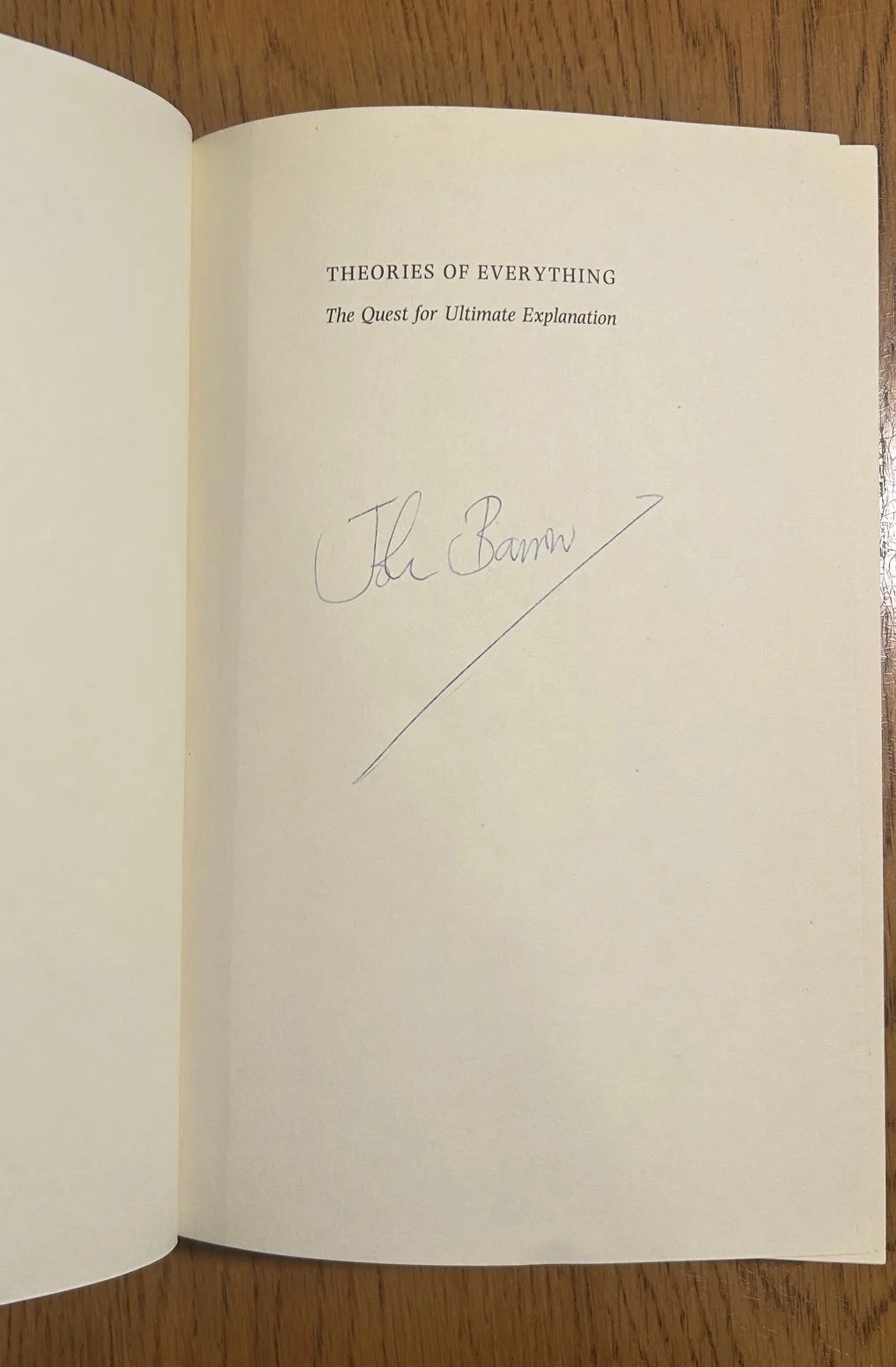
The seller was able to get this copy signed by the author when she attended a lecture he gave in Washington, DC, soon after it was published in 1991. The book itself is in pristine, virtually new condition. The dust jacket shows no signs of shelf wear—the only flaws are some age tanning on the upper edges of the inside flaps that are not visible when the book is closed. Considering how many books Barrow published, there are surprisingly few signed copies on the market, so this is a rare find, especially in this condition. See our photos.
Signed Copy
Seller Inventory #: 0000496