Latest Items
The Besler Florilegium: Plants of the Four Seasons
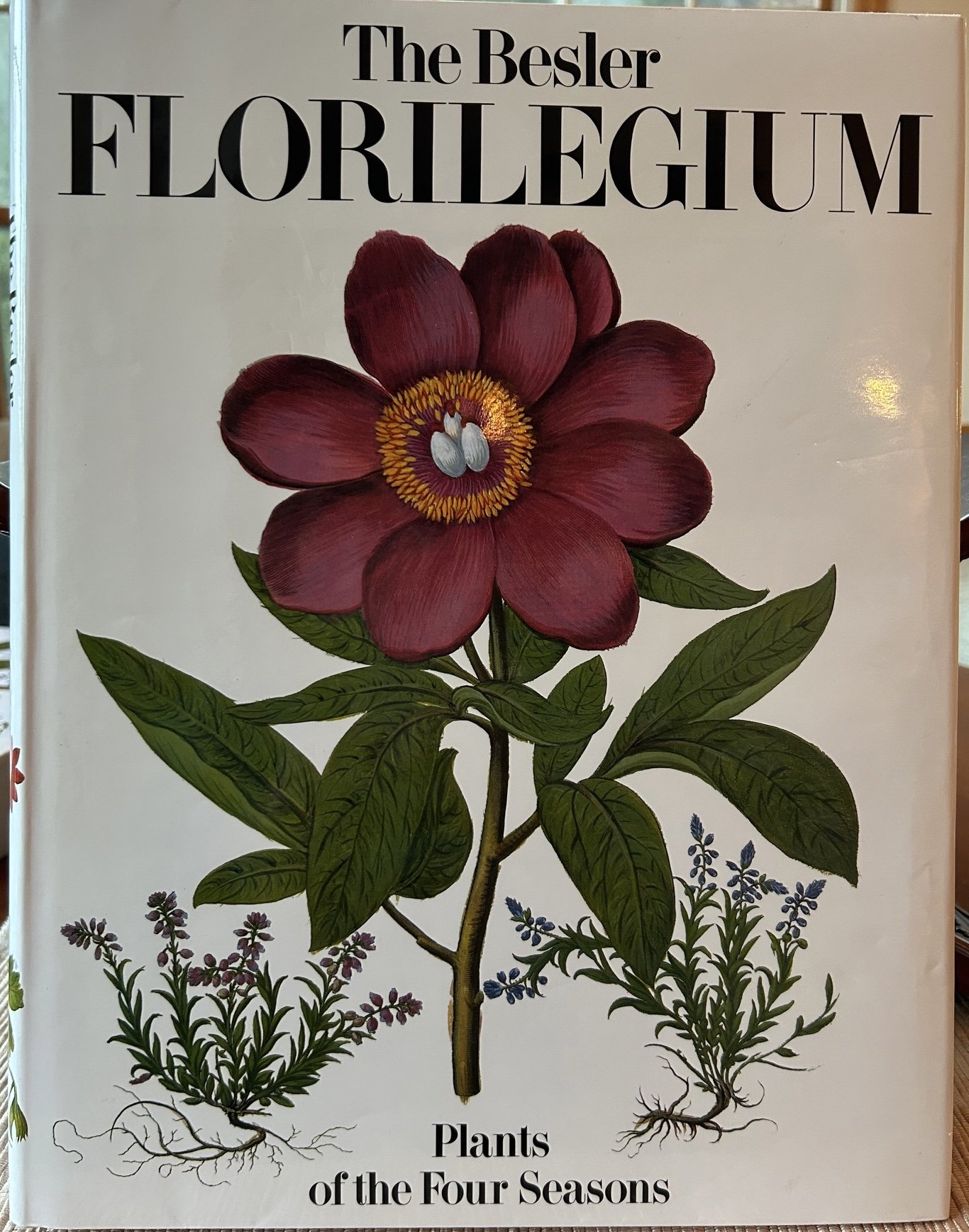
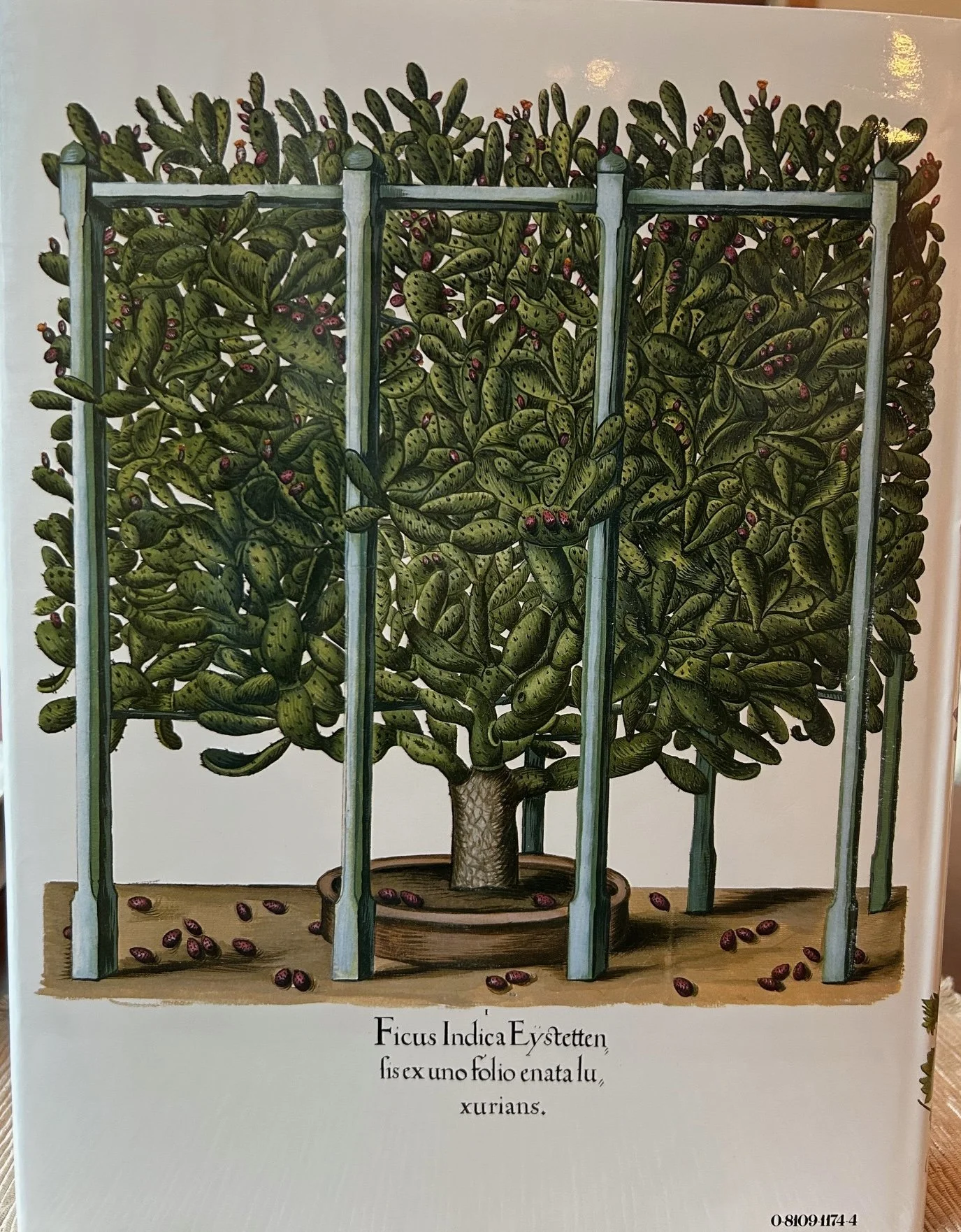
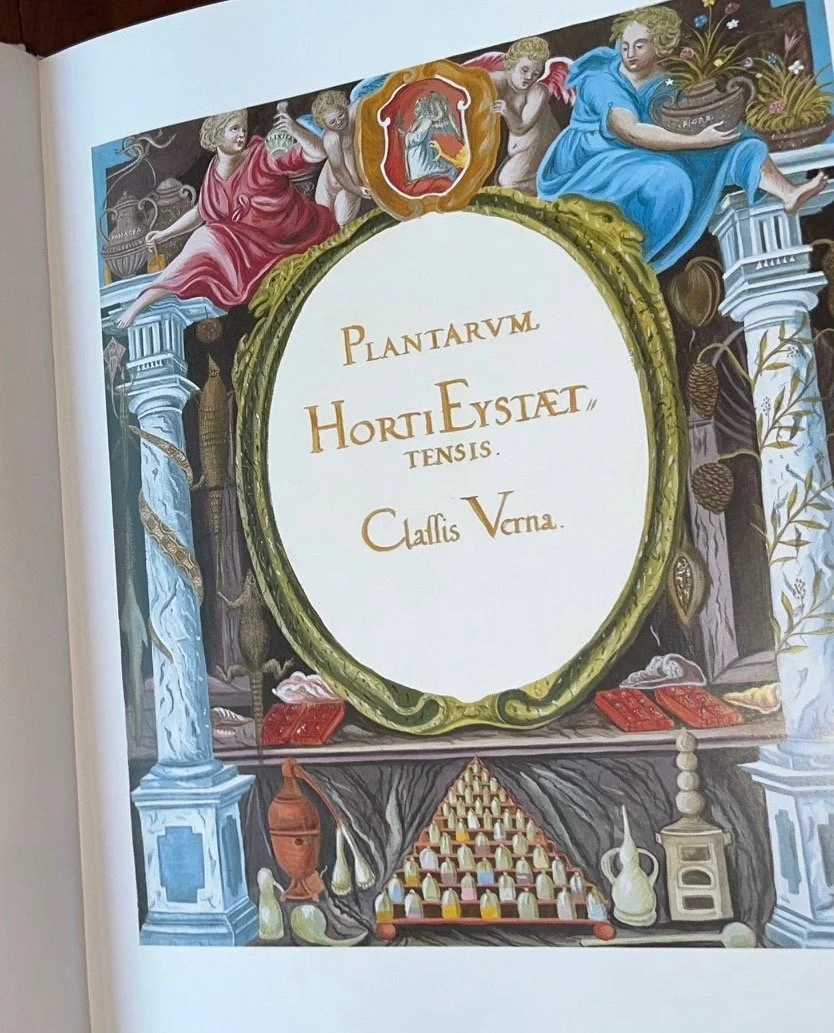
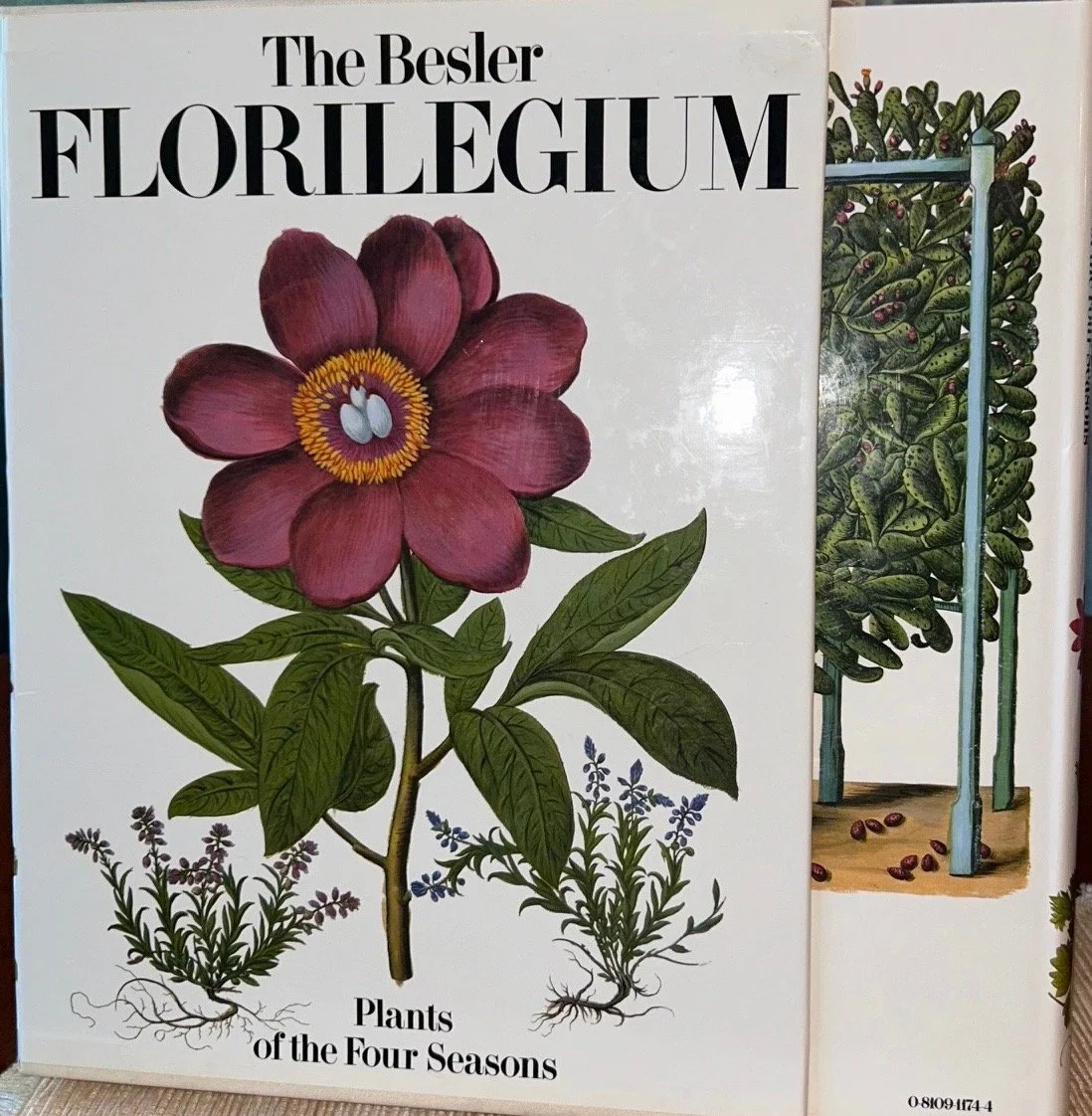
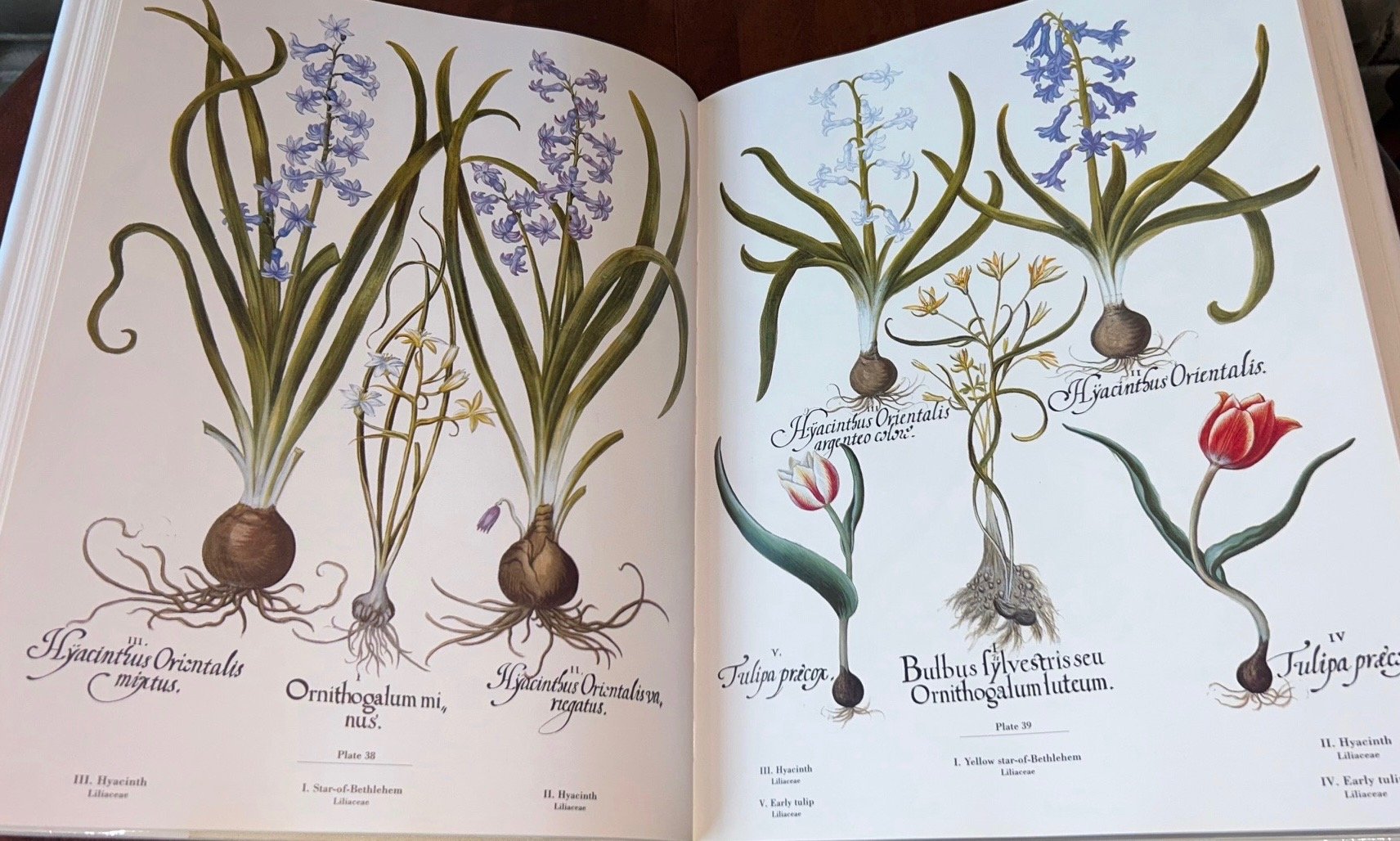
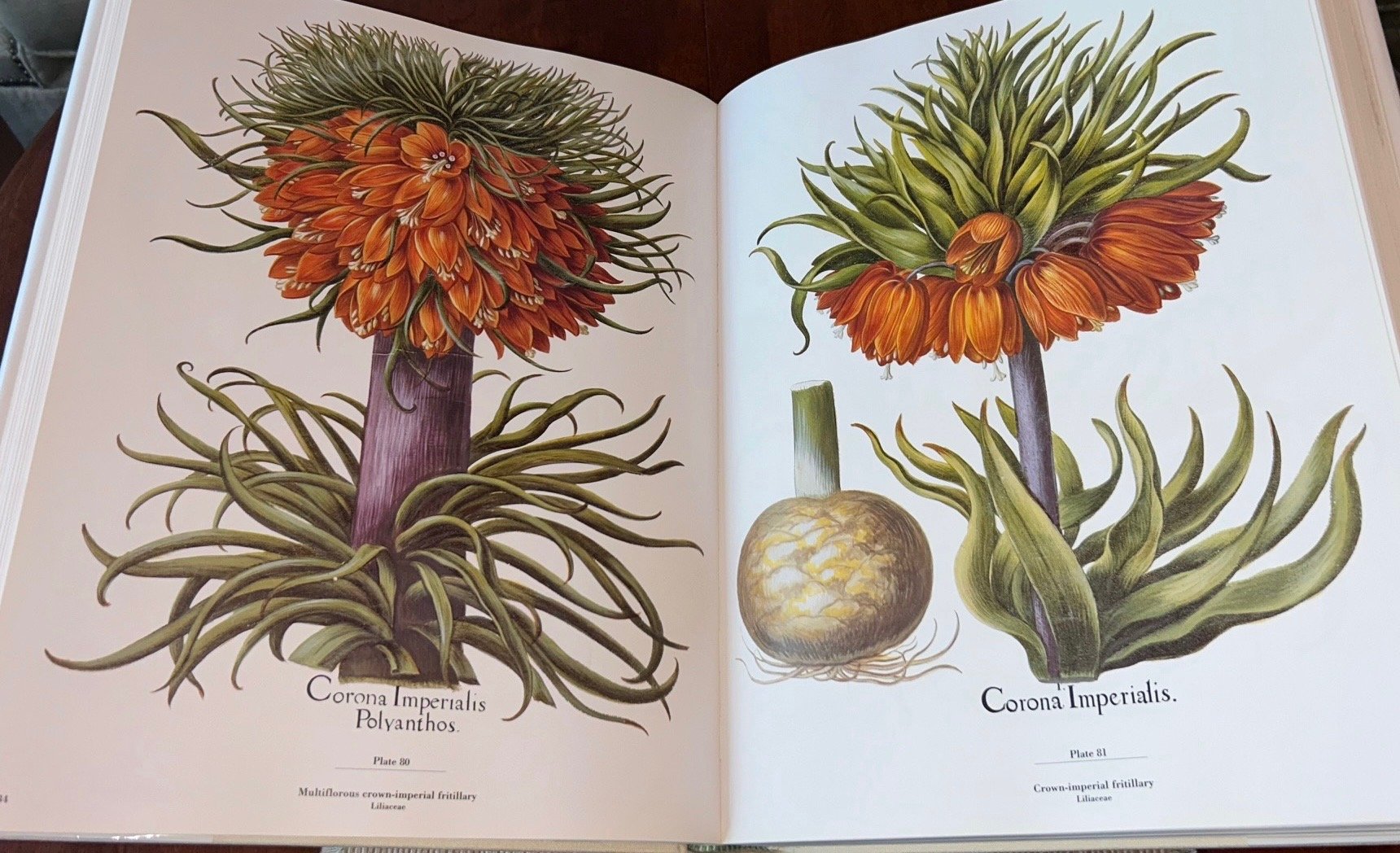
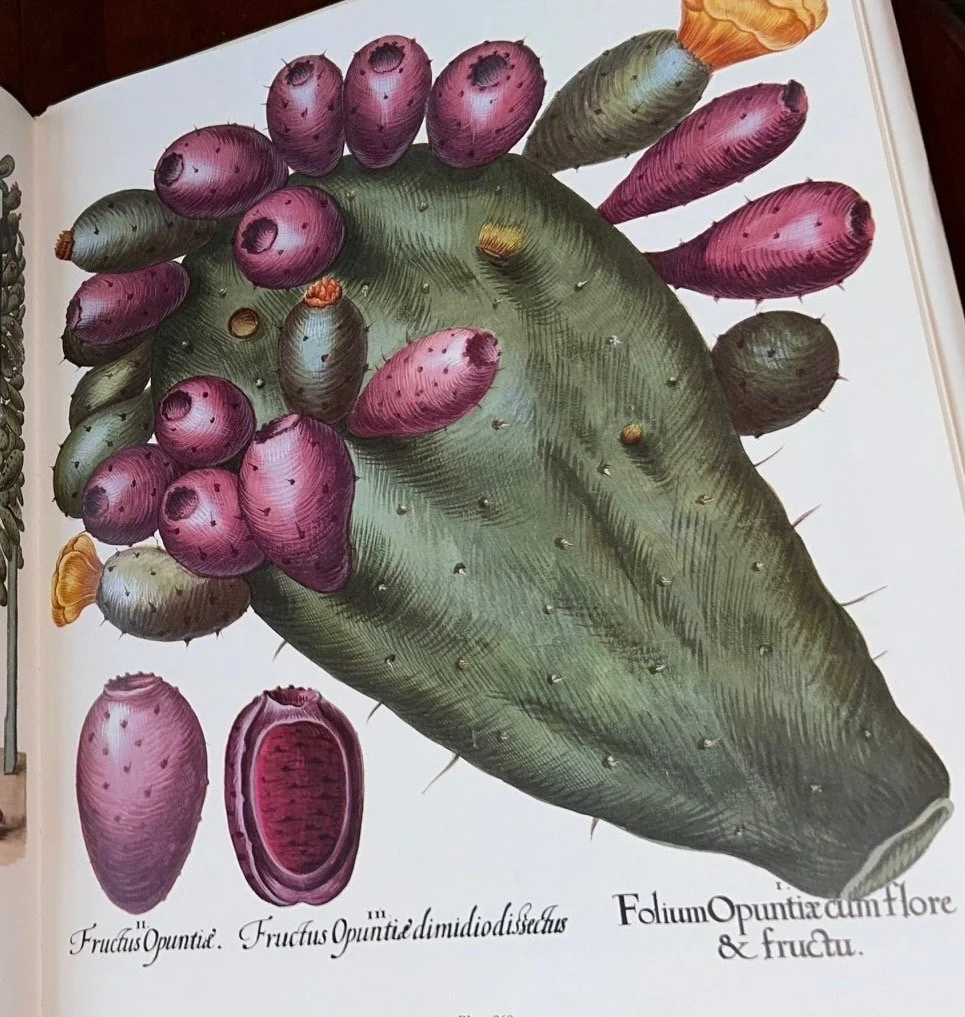
The Besler Florilegium: Plants of the Four Seasons
by Besler, Basilius; Aymonin, Gérard G.; Gascar, Pierre; trans. by Finletter, Eileen and Ayer, Jean
Published in 1989 by H.N. Abrams, New York
ISBN: 0810911744
Edition: First
Binding: Hardback
Condition: Fine
Dust Jacket included. Condition of Dust Jacket: Fine
Comments: Warning: This book is BIG—15.25 inches tall by 12 inches wide by 2 inches thick (38.7 by 30.5 by 5 centimeters), and that’s before it’s inserted into its decorative and protective slipcover. But at least it’s not as big as the book it duplicates. The Besler Florilegium: Plants of the Four Seasons is, at heart, a reproduction of a book originally published in 1613 called, for short, Hortus Eystettensis (The Garden of Eichstätt in English), which was printed on the largest paper available at the time, 57 by 46 centimeters (22.4 by 18.1 inches).
A florilegium was a newly-popular type of book in the 17th century, the successor to the herbal. Herbals were books that illustrated and explained useful plants, particularly medicinal plants, and went back to the days before printing. Florilegia, however, weren’t that concerned about what a plant did—they were more concerned with what it looked like or how exotic it was. They were often commissioned by the owners of gardens who wanted to show off all the wonderful plants they had; they’ve been called “paper museums.” That was the case with the Hortus Eystettensis. Johann Konrad von Gemmingen was the prince-bishop of the city of Eichstätt in Bavaria and the proud possessor of the first botanical garden in German and, in fact, one of the first major botanical gardens outside of Italy. He ordered Basilius Besler, a Nuremberg apothecary who served as his plant consultant, to create a magnificent catalog of the plants in his garden, made up of copper engravings bound into books, so the world could see such things as the hundreds of varieties of tulips he had, and his imports from Turkey, as well as the more prosaic but still beautiful native plants. The first edition had two print runs: the larger one was in simple black ink, with explanatory text, and probably served as reference material. Those copies sold for 35 florins, which later went up to 48 florins. The second, smaller run of prints was lavishly hand colored but had no text, and sold for what was then the jaw-dropping sum of 500 florins. That was such a high price that one potential purchaser, Duke August of Brunswick-Lüneburg, seriously inquired if it was a misprint, and the real price was actually 50 florins. Still, the book was so gorgeous he did wind up buying it, and, in fact, the original printing of 300 copies sold out within four years. Both the prince-bishop and Besler considered their project to be a moneymaker all along as well as a work of art and status symbol. Unfortunately, the prince-bishop died before it was completed, but Besler made enough to buy himself a nice, new, and big house in a fashionable neighborhood in Nuremberg from his share of the profits. In fact, you could say the Hortus Eystettensis is a moneymaker to this day: A copy of the color printing of the 1613 edition sold at a Christie’s auction about ten years ago for £1,930,500 (roughly $2,600,000 under today’s exchange rate), well in excess of its estimate. It’s also considered one of the finest examples of florilegia that was ever created.
Luckily, you don’t have to pay anything like that to get a fine copy of the Hortus Eystettensis. In fact, one could say that this reproduction is actually better than the original. (And that’s not just because it’s slightly smaller and much less expensive.) In this new, modern edition, readers get not only copies of the original color prints, but they get captions and text, which were left out of the original color versions. They also get new commentaries especially written for this reproduction. The original had 367 full-page color plates, roughly calibrated to match the days of the year. This edition has 373 full-page color plates, which includes such things as copies of the original title page and chapter pages, as well as 13 color text illustrations. It also includes smaller black-and-white images, much as would have appeared in the original less-expensive print run, with which the modern editors are able to provide details about the plants that appear in the color plates without disturbing the beauty of those images. As in the original, the plates are arranged by season, showing first the flowering and then the fruiting stages of the different plants. Some plates are devoted to a single plant, but most feature more than one. This modern edition was originally published in Paris in 1987; the new forward by Pierre Gascar and the notes and commentaries on the plates by Gérard G. Aymonin were written in French. This edition was published in New York in 1989 and translated into English by Eileen Finletter and Jean Ayer. Only a little shelf wear on the slip case keeps us from describing its condition “as new”—there is not even any sun damage on the spine of the dust jacket. The book itself is bound in white cloth with abbreviated title, author, and publisher’s names stamped in gold, as well as an image from one of the plates. The text block is tight and firm and there are no tears, folds, or markings on any of the pages. Different full-color, full-size reproductions of images from the plates are reproduced on the front and back of the slip case and a smaller one is on the spine, along with the title; the dust jacket is a copy of what appears on the slip case. Altogether, this copy of The Besler Florilegium: Plants of the Four Seasons is as excellent as one could ask for, and would make a wonderful addition to any library focusing on horticulture, art, or early books.
See our photos. Because of its size and weight, this item will incur extra shipping charges.
Seller Inventory #: 0000489