Latest Items
Paul Rudolph: Dessins d'Architecture/Architekturzeichnungen/Architectural Drawings
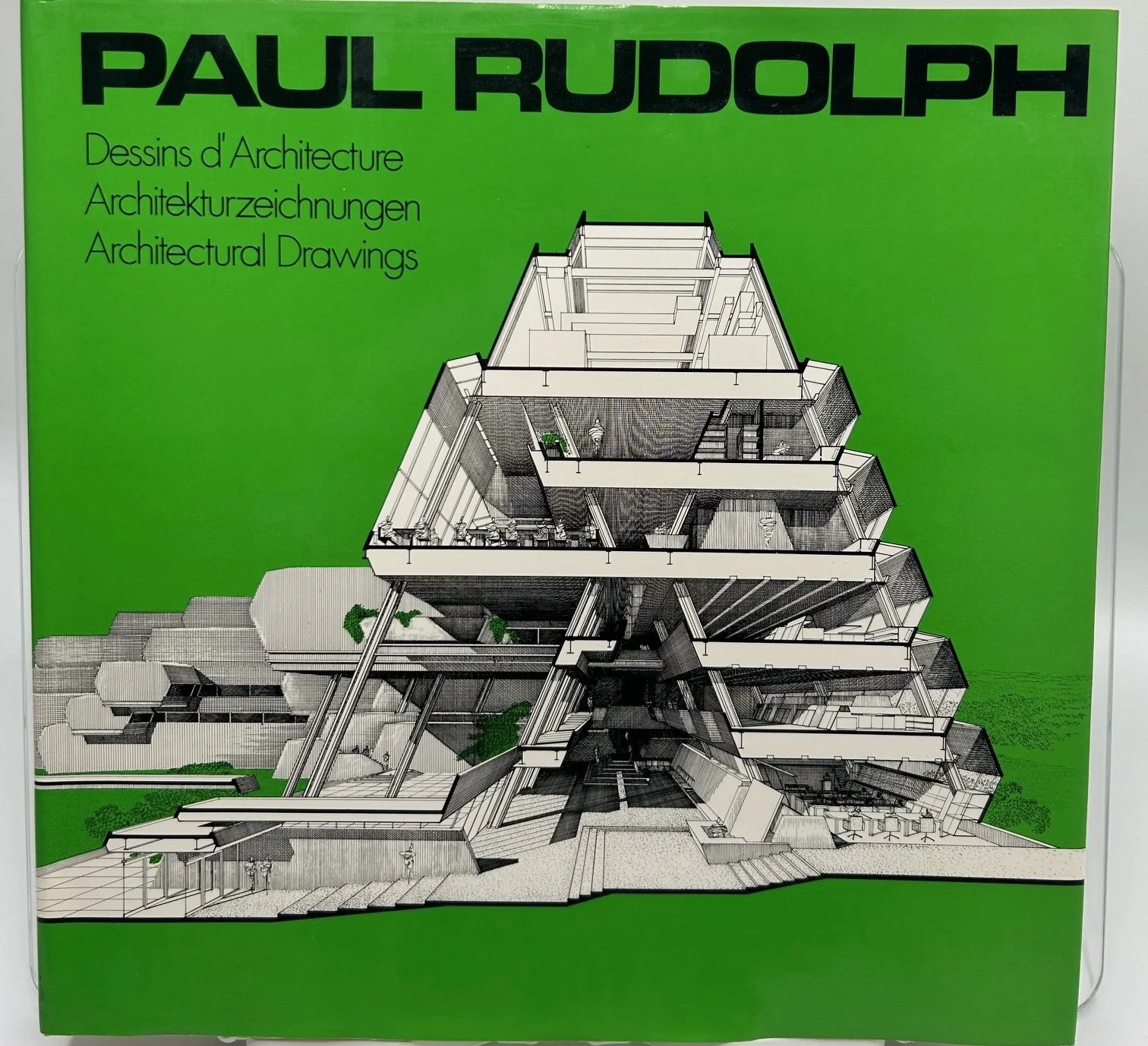
Paul Rudolph: Dessins d'Architecture/Architekturzeichnungen/Architectural Drawings
by Rudolph, Paul; Futagawa,Yukio (editor); Oederlin, Chantal; Seidel-Vollmann, Stefanie (translators)
Published in 1981 by Architectural Book Publishing Co., New York
ISBN: 0803802080
Edition: First American edition
Binding: Hardback
Condition: Fine
Dust Jacket included. Condition of Dust Jacket: Near fine
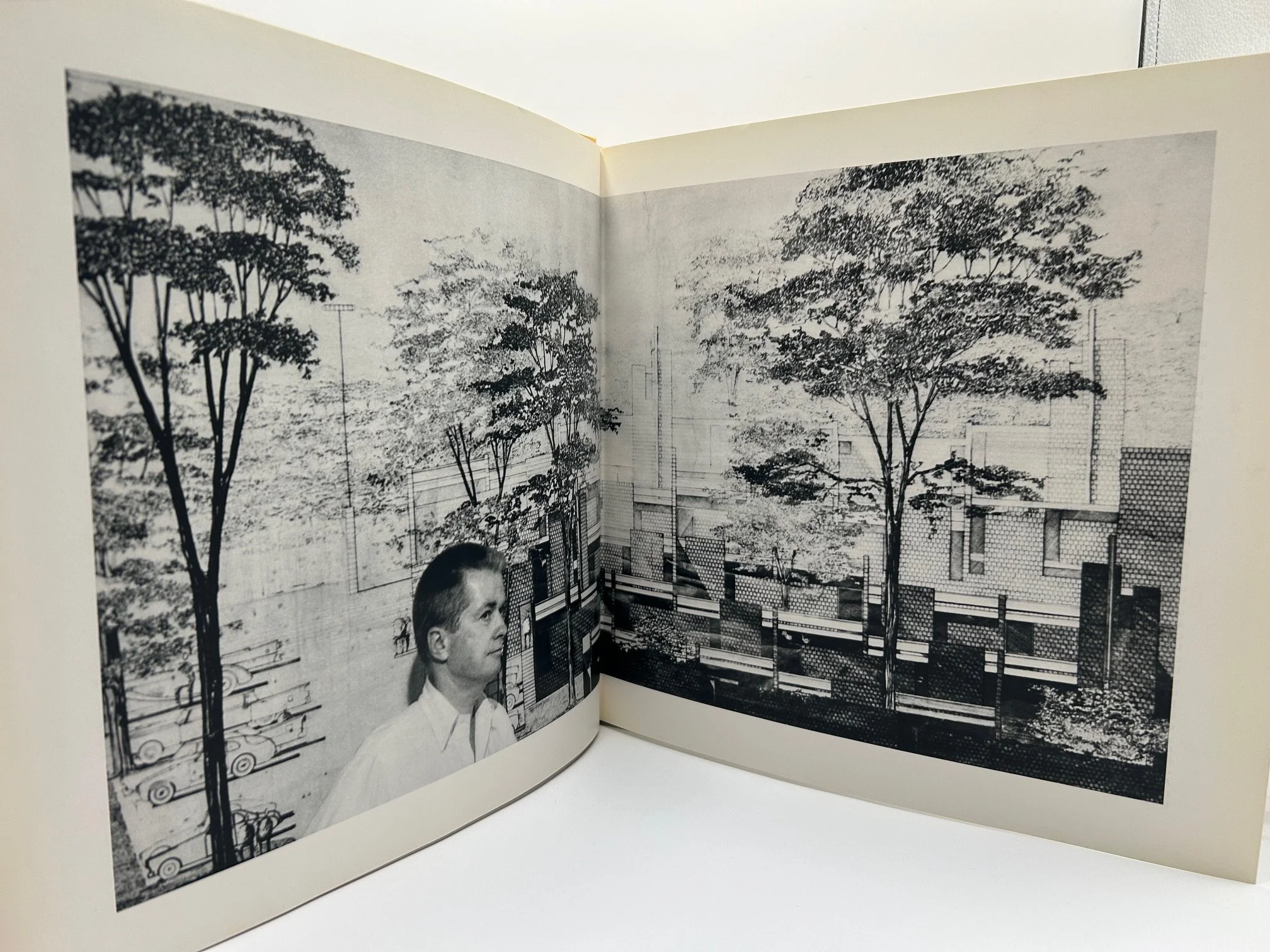
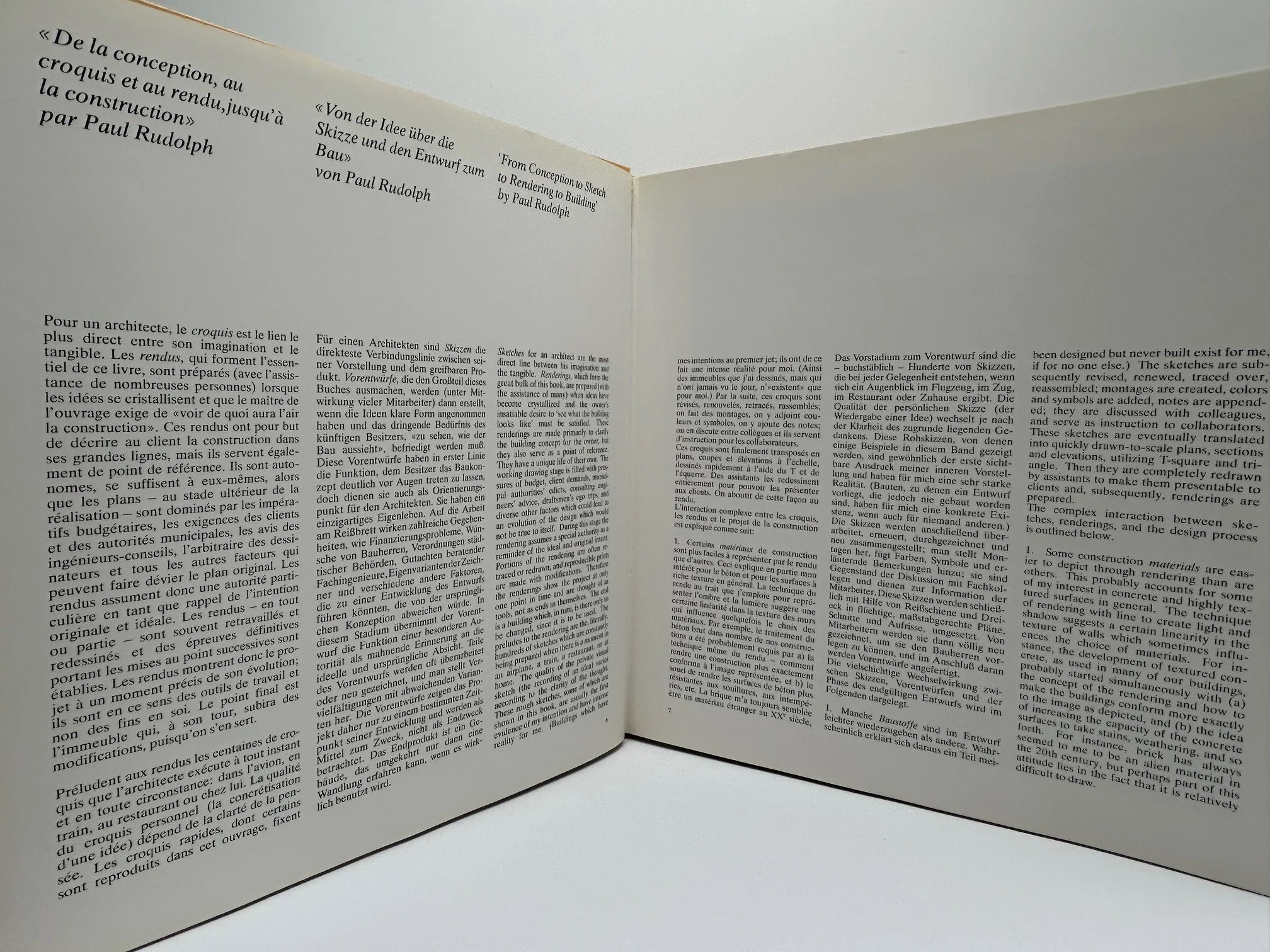
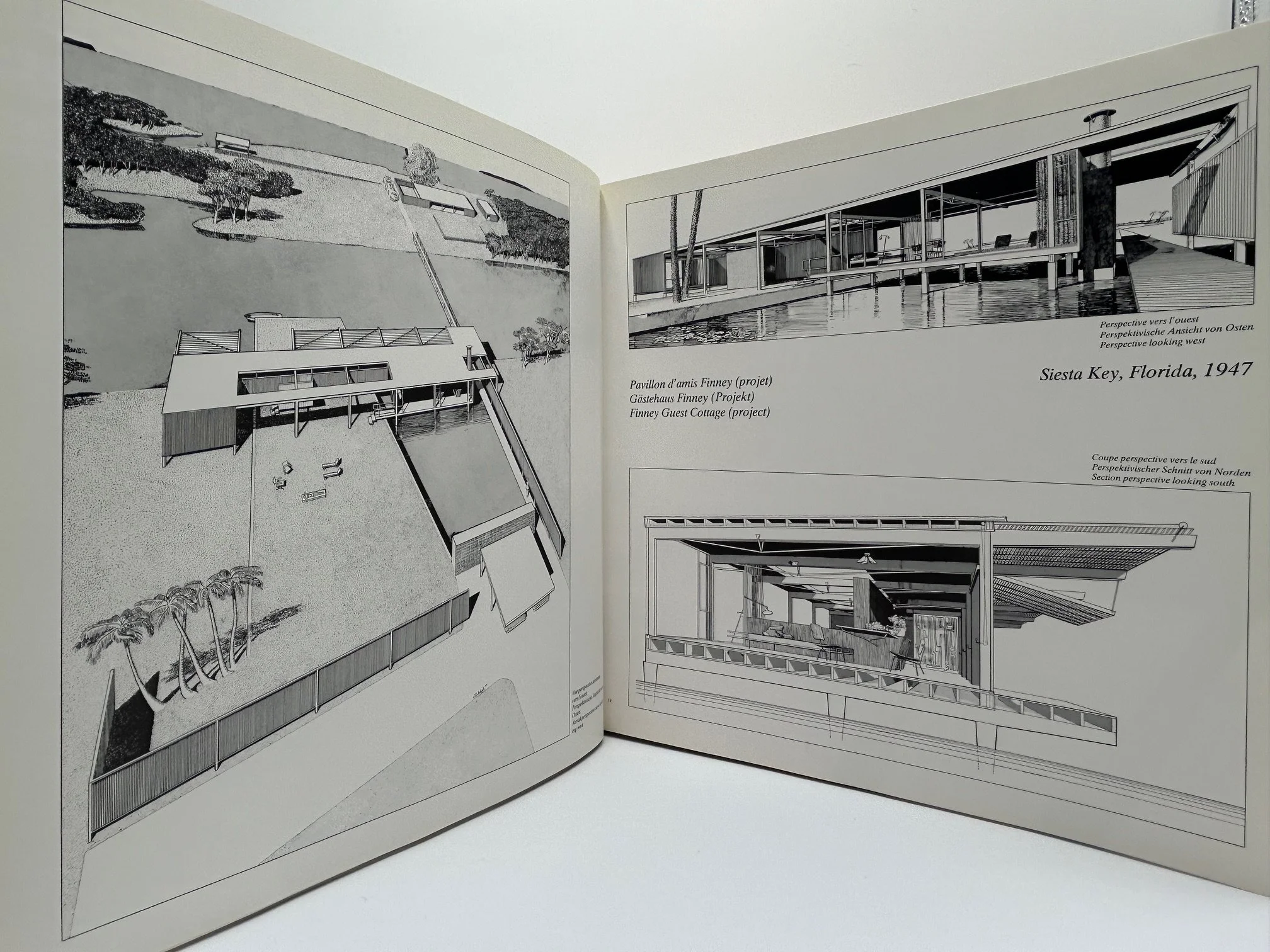
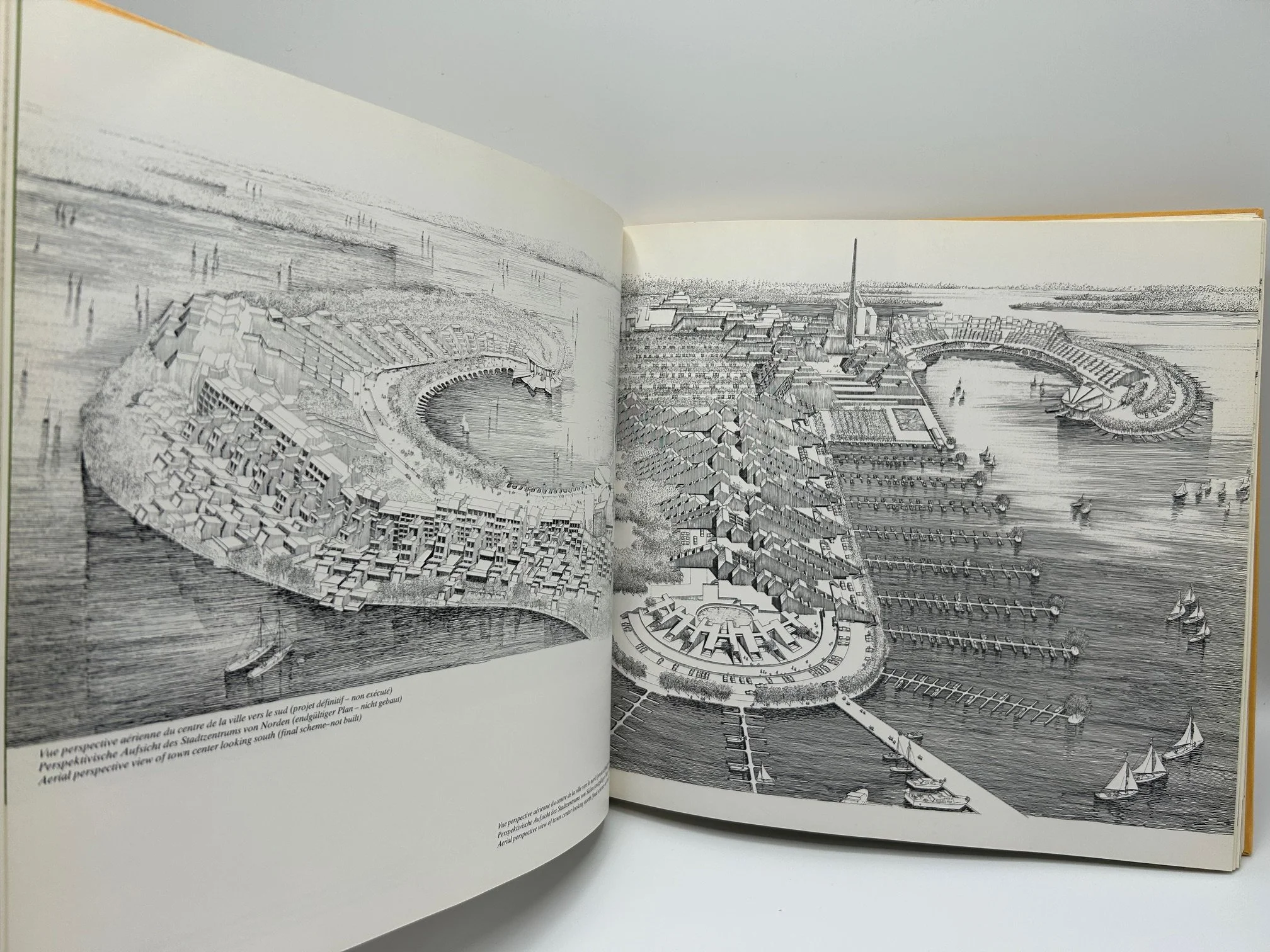
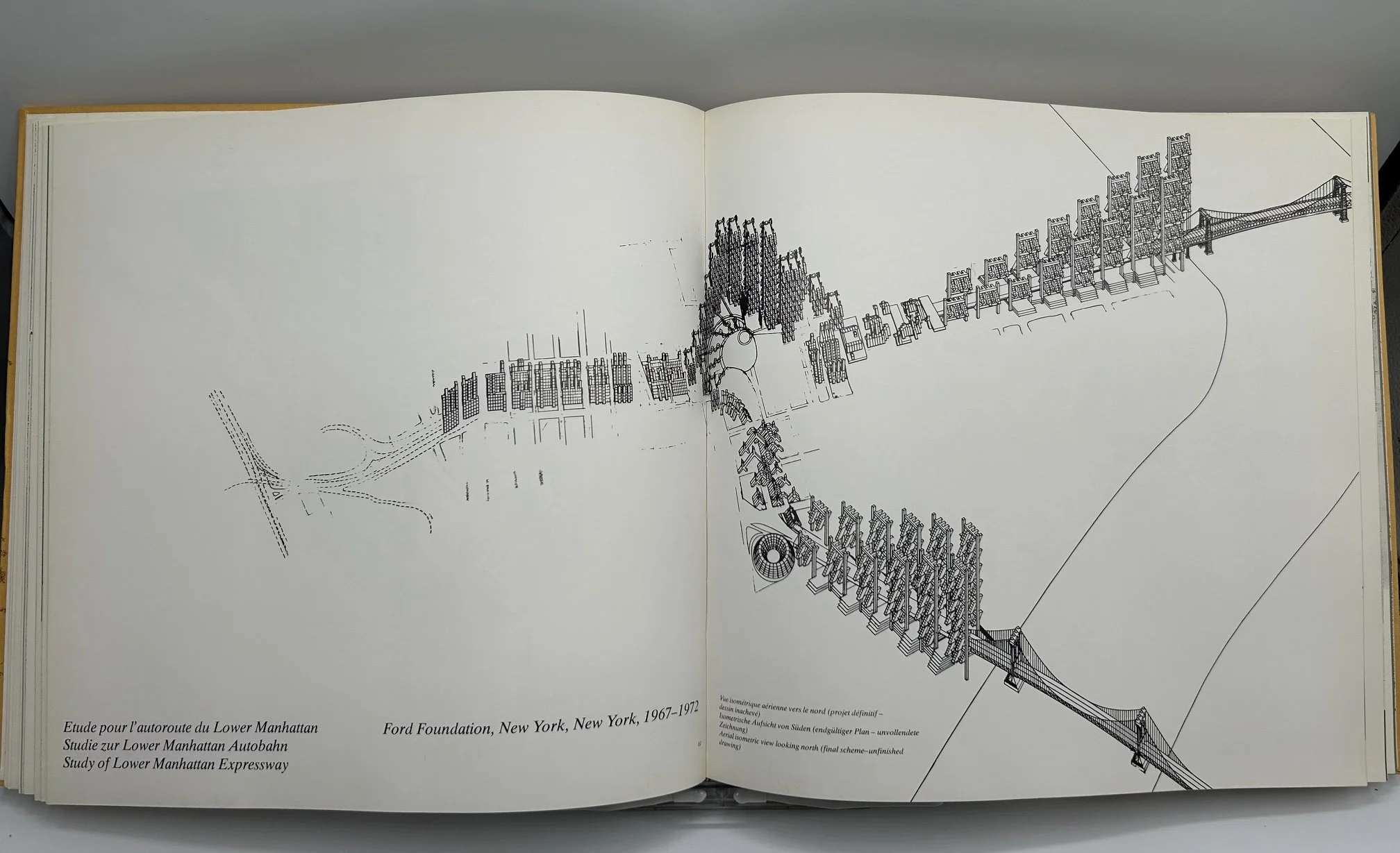
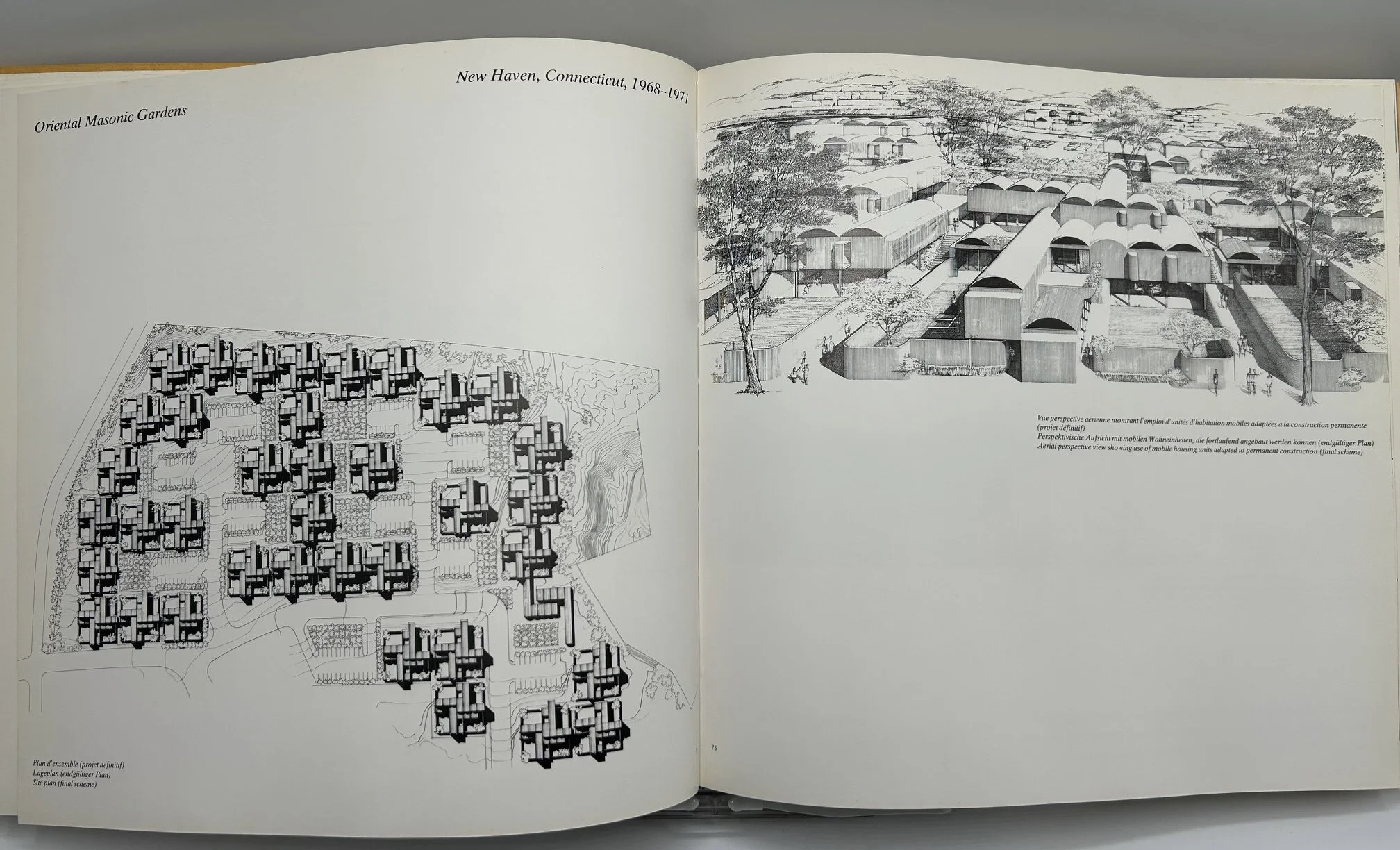
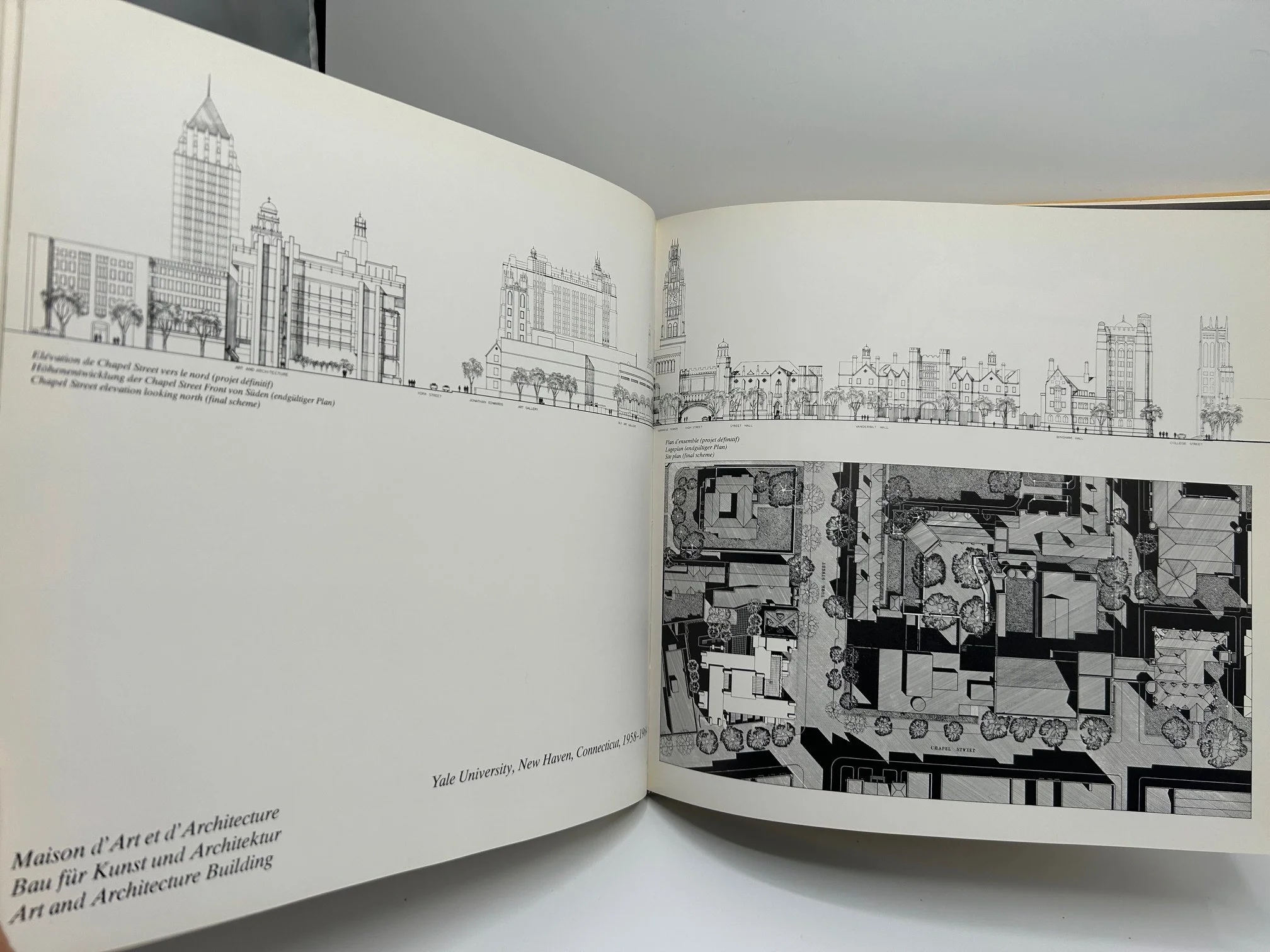
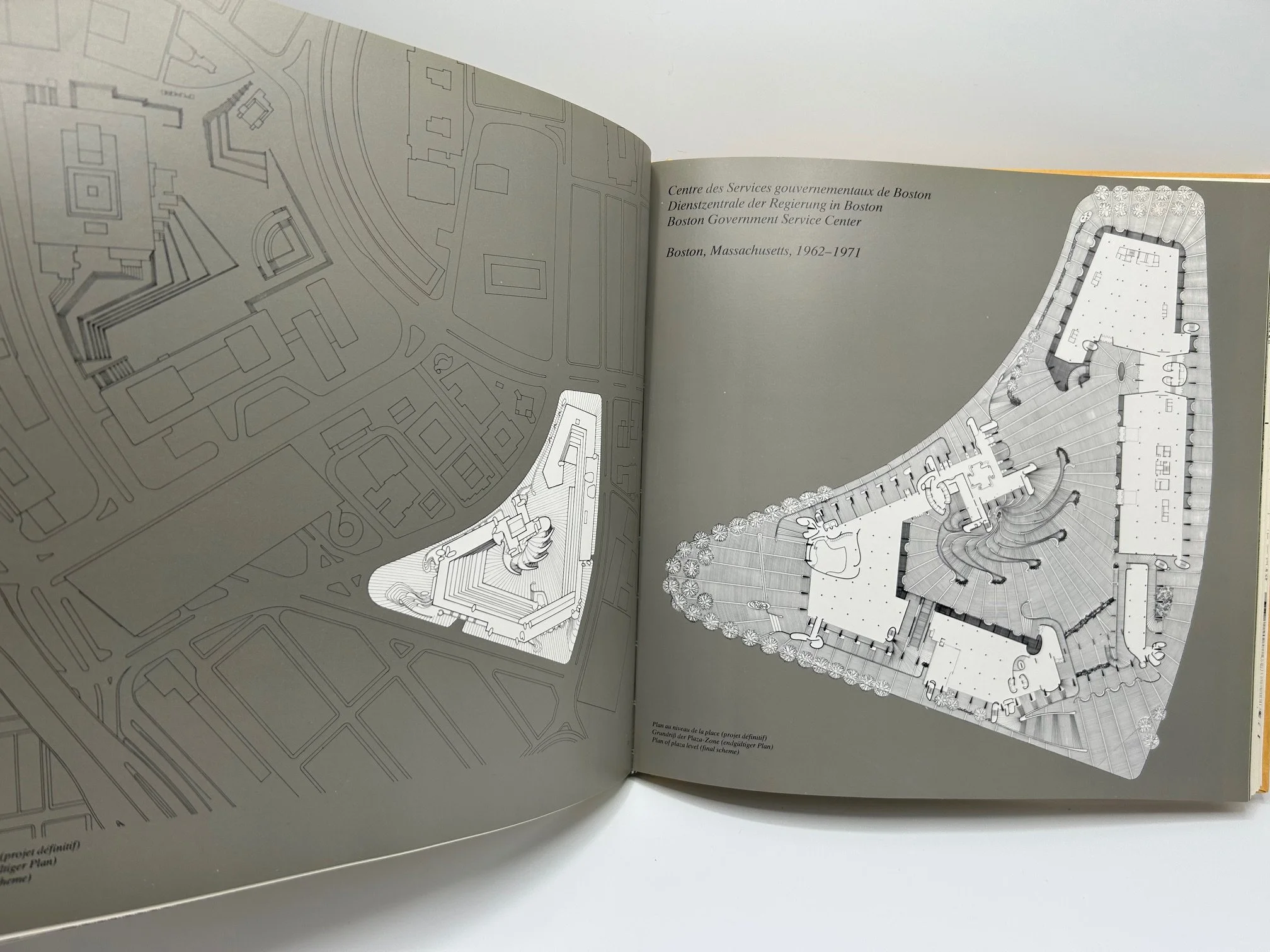
Comments: New York Times architecture critic Michael Kimmelman recently called Paul Rudolph, “American architecture’s bright, shining light of the Kennedy era….[T]he jet age version of Ayn Rand’s Howard Roark.” He was a star of modernist architecture, particularly of the Brutalist form, and appeared not only in trade publications but in the popular press, such as “Vogue” magazine. Rudolph made his name in the 1950s designing private homes out of plywood and concrete in Sarasota, Florida, homes that are now considered classics of mid-century modernism. Their popularity and acclaim earned Rudolph bigger commissions and he moved back north, where he grew up—and “bigger” does not just mean “more lucrative.” He projects became massive. He designed Yale University’s Art and Architecture Building in 1958 (and was named chairman of the school of architecture the same year), with 37 levels subdividing seven stories, a use of space that became a hallmark of Rudolph’s work. In 1967, the Ford Foundation commissioned him to repurpose Robert Moses’s plan to demolish much of lower Manhattan so the area could be used for expressways instead; he came back with a design for a structure two miles long that stacked apartments, trains, people movers, garages, and lanes of traffic on top of each other. (It was never built.) In 1970, New Haven, Connecticut, did build another of Rudolph’s housing projects, called Oriental Masonic Gardens, which again involved plywood and prefab rectangular units with vaulted roofs built in L-shaped configurations around courtyards. The problem was, the roofs leaked and the residents felt like they were living in a trailer park. (Both projects appear in this book, the Ford Foundation commission on page 82, Oriental Masonic Gardens on page 74.) It looked good on paper, though. Similar complaints by residents and users of his buildings—that their designs looked good, but the finished products were difficult to live and work in—have led to an increasing number of demolitions. But what designs! And what drawings! Kimmelman calls them, “phenomenal, visionary drawings” for “flamboyant, muscular buildings.” Aside from an introduction by Rudolph, this book is nothing BUT his drawings for 54 of his designs, built and unbuilt, starting in 1947 and continuing through 1971.
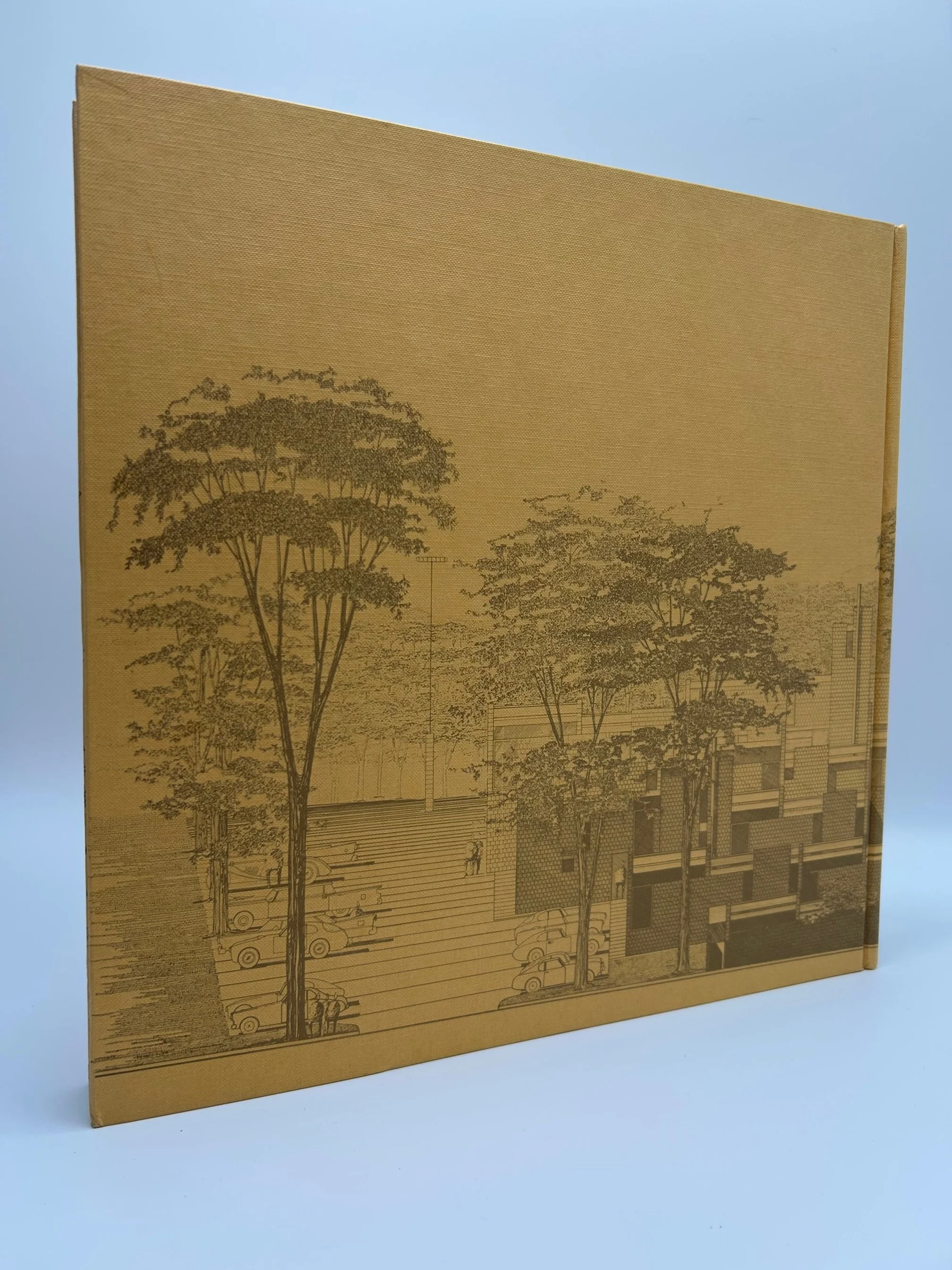
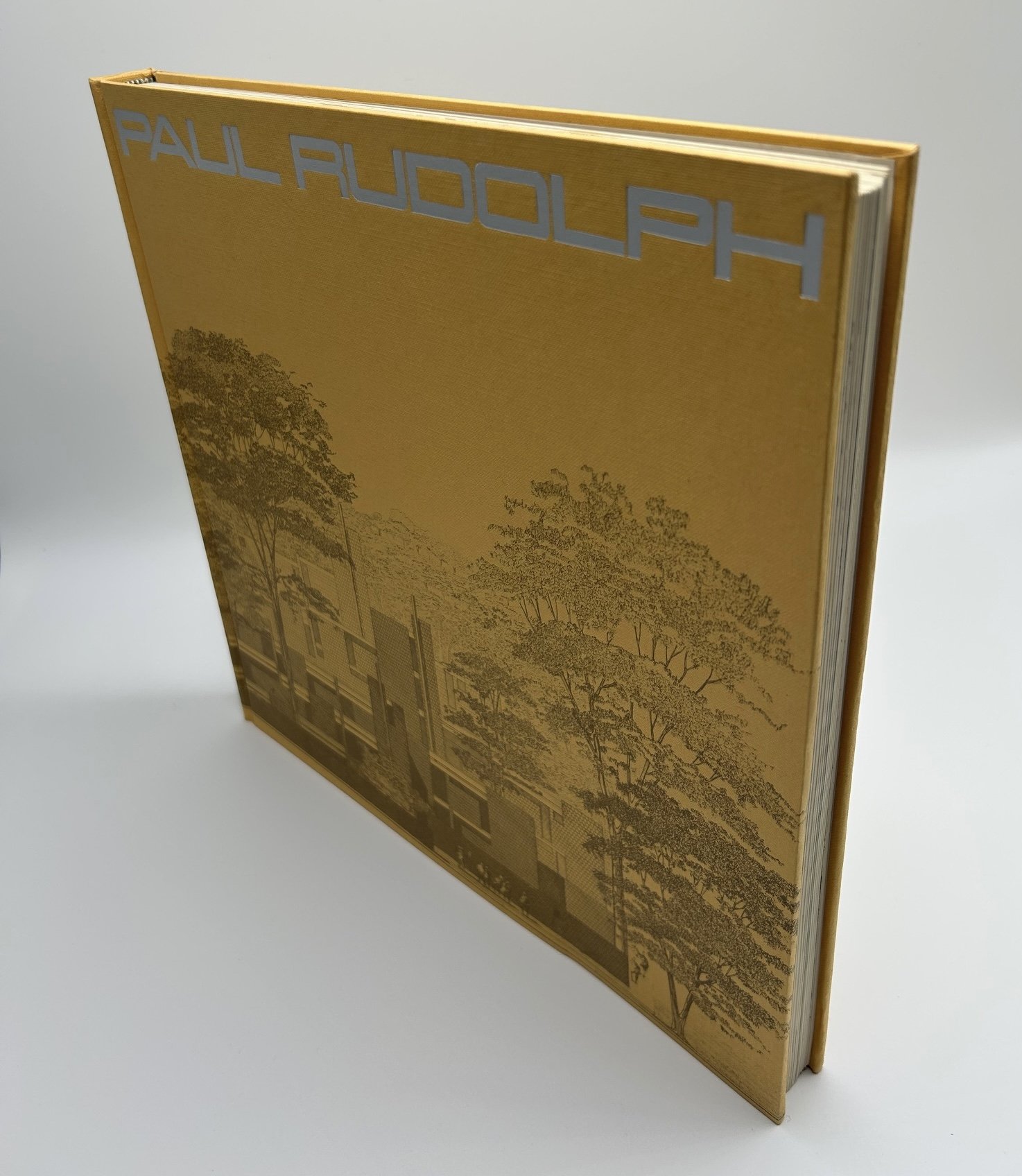
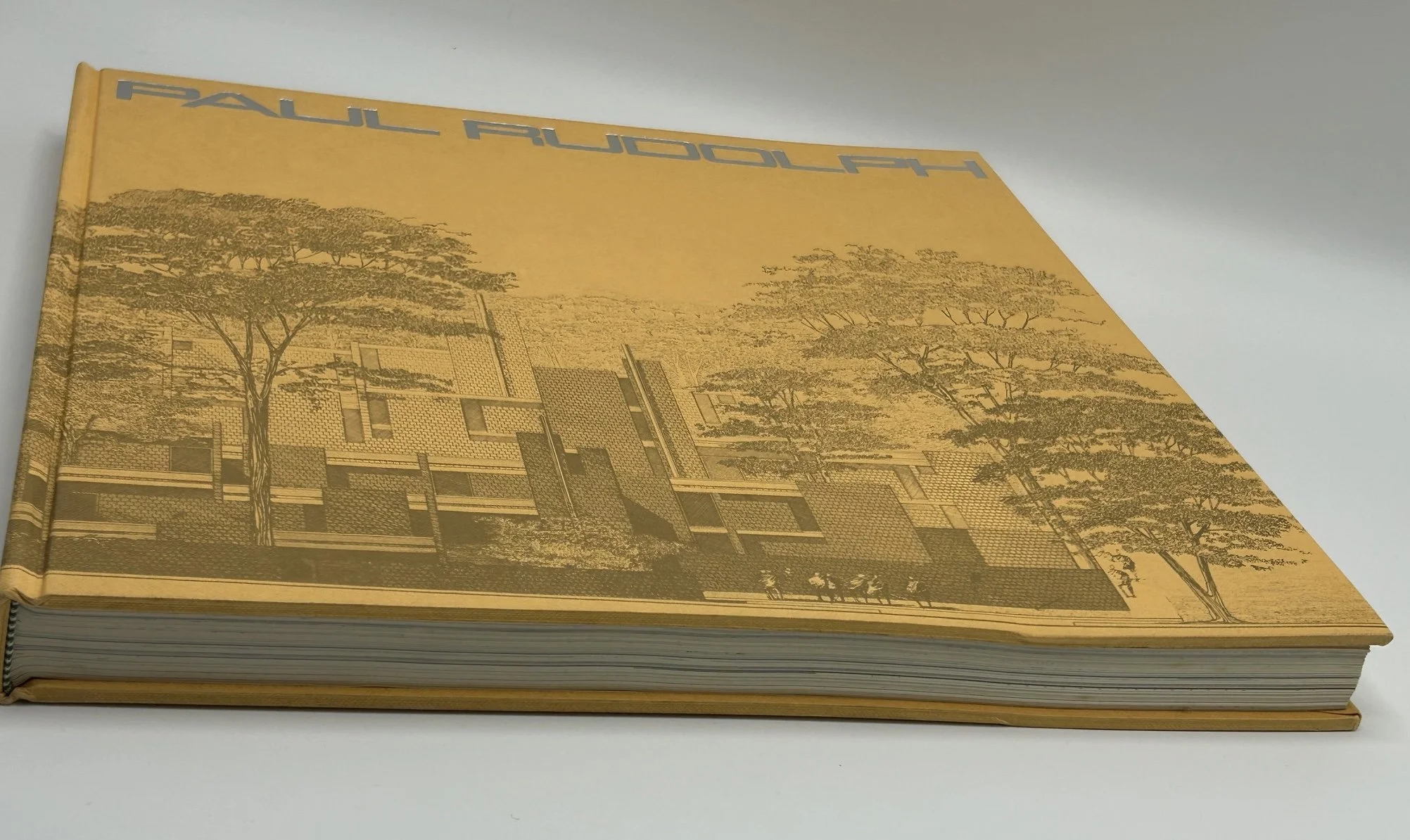
Like its title—“Paul Rudolph: Dessins d’Architecture/Architekturzeichnungen/Architectural Drawings”—the text of the book, which mostly means captions, is trilingual, with the German, French, and English translations appearing in parallel. All of the drawings are in black and white, but a few have color backgrounds. The copy is a first American edition. It is in excellent condition, with a copy of his 1960 commission for married student housing at Yale University printed on the boards of the yellow buckram cover of the book itself, not the dust jacket. Aside from a small dent on the bottom edge of both the front and back boards, the condition of the book is flawless, with no marks or even shelfwear or soiling. The dust jacket is in slightly—but only slightly—lesser condition, with a bit of rubbing on the front and back panels and a couple of creases at the top of the spine, but it is not clipped and there is no sun damage. Please see our photos. Additional photos on request.
Seller Inventory #: 0000531