Latest Items
Gregg Shorthand: A Light-Line Phonography for the Million

Gregg Shorthand: A Light-Line Phonography for the Million
by Gregg, John Robert
Published in 1916 by The Gregg Publishing Company, New York, Chicago, San Francisco
Edition: New and revised edition
Binding: Hardback
Condition: Near Fine
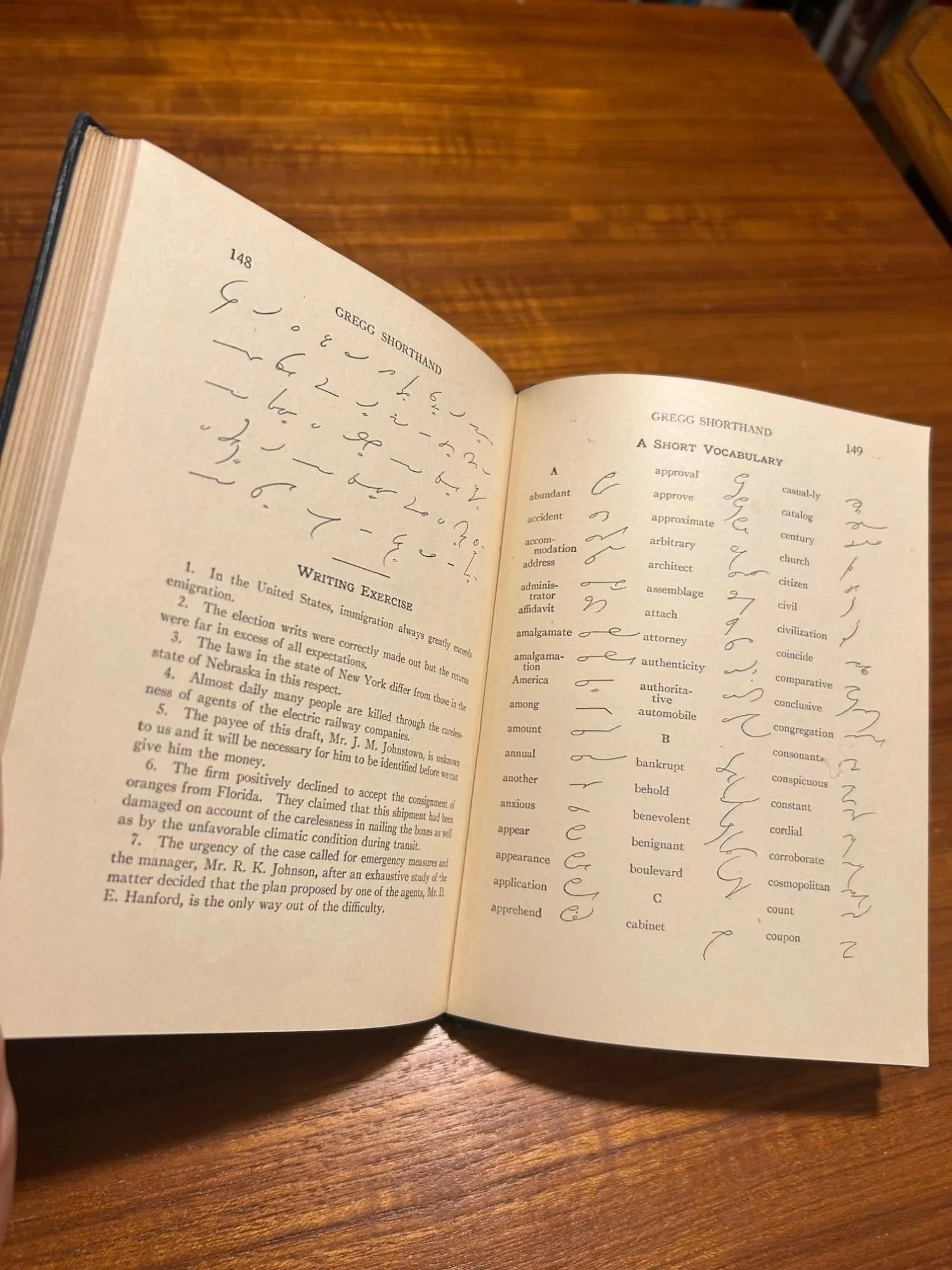
Comments: For the first three quarters of the twentieth century, and actually in many instances well before that, business communication was ruled by shorthand. Shorthand, generally speaking, was the way to quickly transcribe spoken words onto paper using symbols and abbreviations so they could later be written out into a cleaner, more formal documents. Before the end of the nineteenth century, there were dozens of shorthand systems, frequently devised by the individual users. Things began to be more standardized with the advent of the typewriter, and soon, two systems, Pitman and Gregg, came to rule the day. When John Robert Gregg came to the United States from Great Britain in 1893, shortly after publishing a pamphlet on his own form of shorthand, which he called Light-Line Phonography, he found there was a great void of knowledge of ANY shorthand system, which he set out to fill with his circles, hooks, and loops. Light-Line Phonography became popularly known as Gregg Shorthand and he traveled all through the country, selling and demonstrating his system. Before long, Gregg Shorthand became—and stayed—the predominant shorthand system in the U.S. and was taught in high schools and what were then known as “business colleges,” post-secondary schools that taught specific clerical skills. Knowing Gregg Shorthand was seen as a definite way for women to advance through the ranks of the secretarial pools at larger businesses and was an asset for a number of other professions, such as journalism and legal work. The system was not fixed, but was updated by Gregg or his successors roughly every fifteen years, and manuals frequently came out in two versions, one for high school students and one for older students.
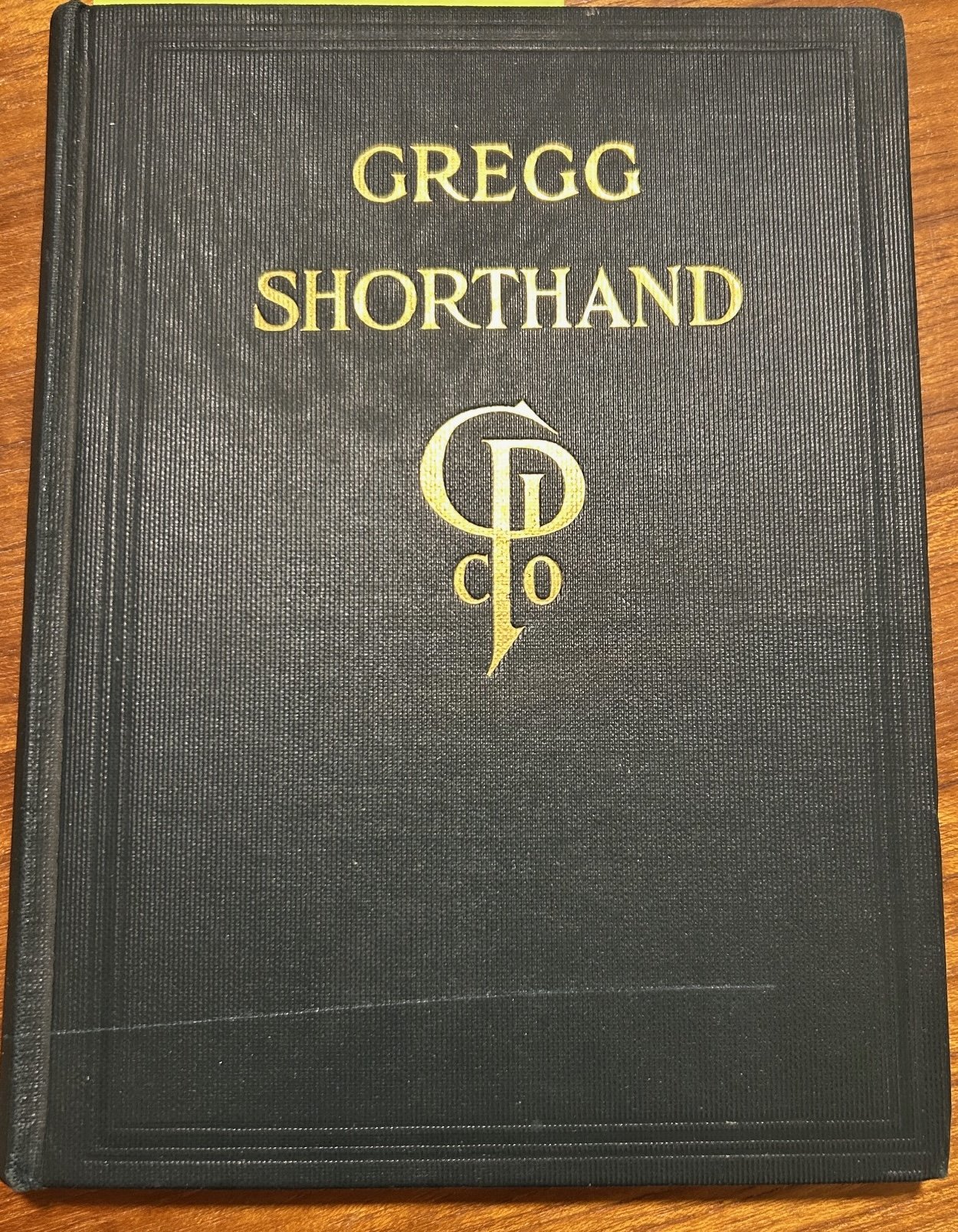
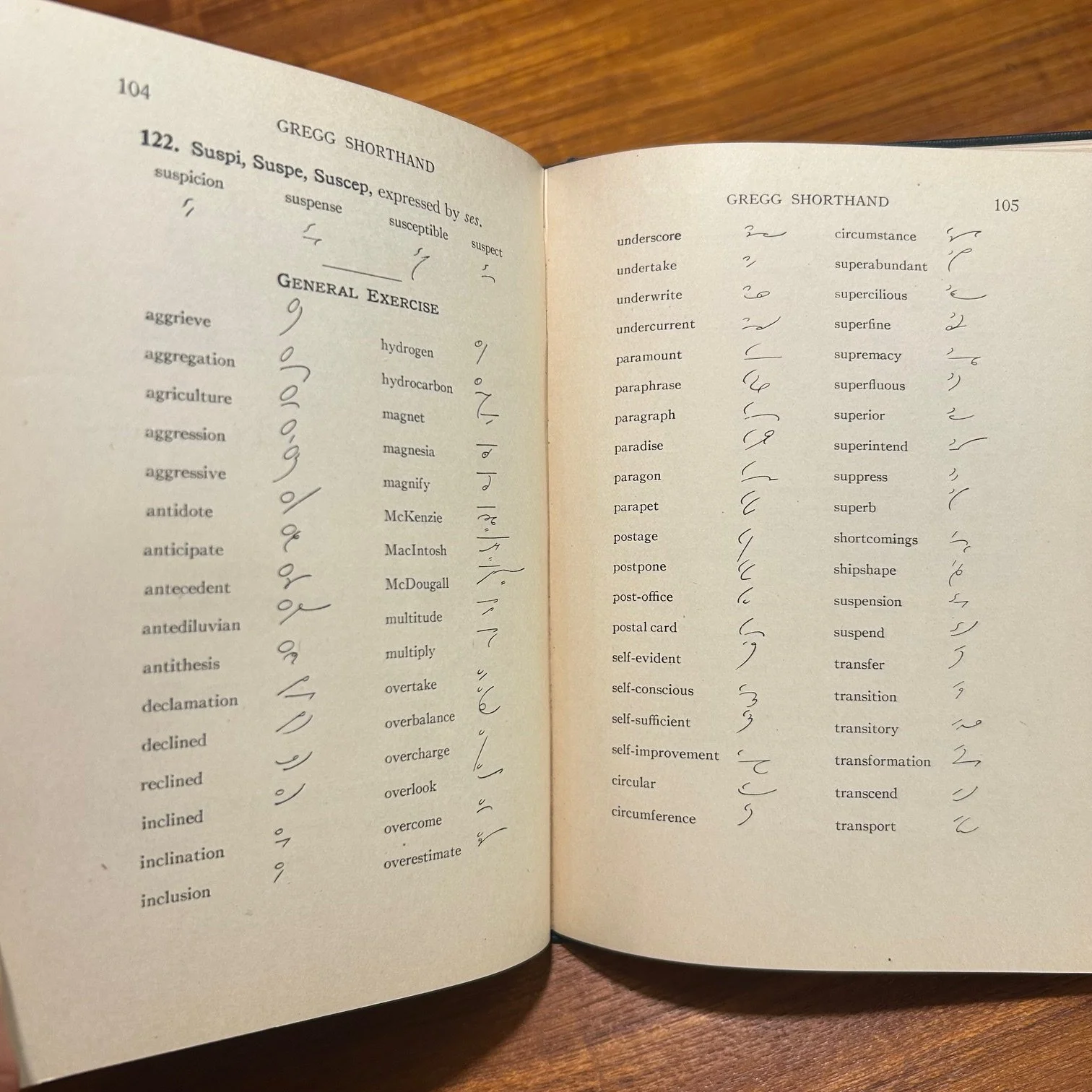
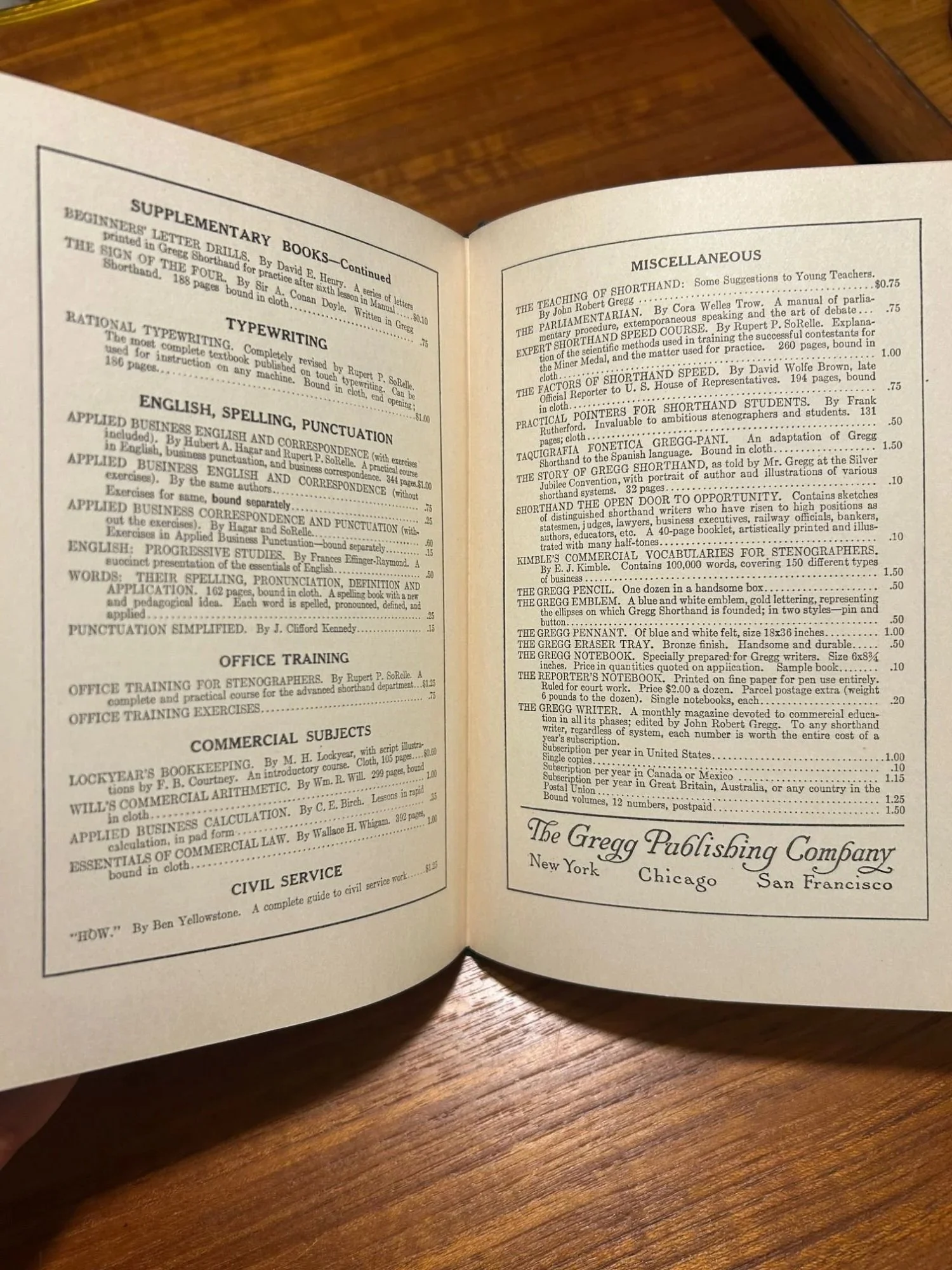
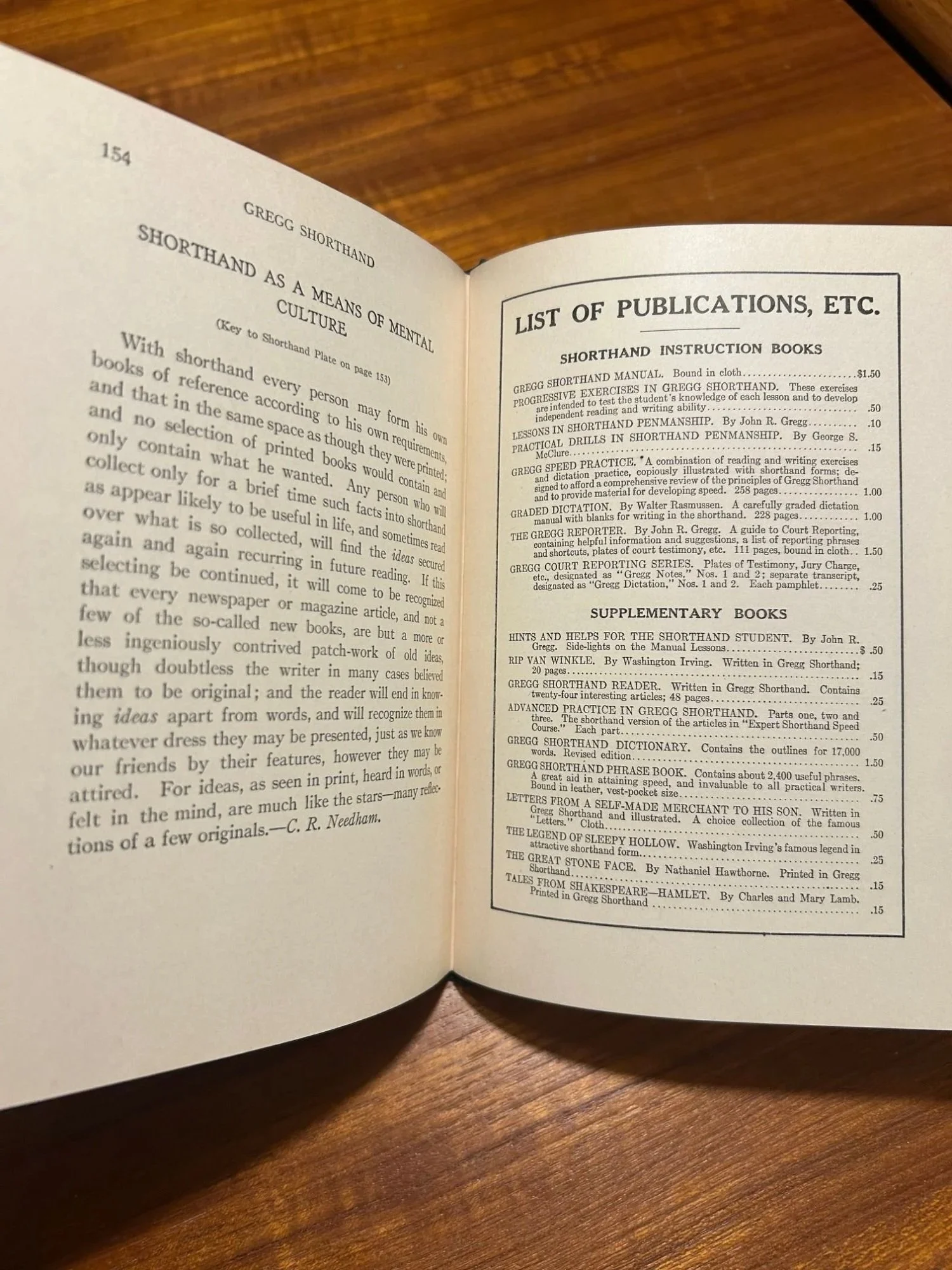
This little book is one of those manuals. The title on the cover and spine is slightly different from the title on the title page, reflecting the shift from the formal name Gregg had given his method to the popular one: The title on the outside of the book is simply “Gregg Shorthand,” while on the title page it says, “Gregg Shorthand: A Light-Line Phonography for the Million - New and Revised Edition.” It includes a few introductory essays and a couple of postscripts, with twenty lessons in between. It ends with six pages of advertisements for other items sold by the Gregg Publishing Company. This copy was published in 1916 and despite its age, is in fantastic condition. These books were meant to be toted to class every day and used for homework, and most of the surviving copies look the part, with bashed up covers and underlining and notes throughout. This copy, however, looks like somebody bought it and then stowed it in the bottom of a trunk and forgot about it, only to pull it out a hundred years later. The pages show the usual faint discoloration that naturally comes with aging but that, and a light scratch that runs across the bottom of the front cover, are really the only flaws. Unusually, the title of the book is stamped in gold foil on the front and spine and what appears to be a colophon for the publishing company is also stamped in gold beneath the title on the front—all other copies that we have seen have been blind stamped this way, without the appearance of any gold. There is a blind-stamped decorative frame around the front cover as well. It is bound in what appears to be navy blue buckram—again, this was a book that was meant to be used, so they used a sturdy cloth. The text block is tight, and there are no marks or folds or tears on any of the pages, nor are any pages loose or missing. See our photos.
Seller Inventory #: 0000507